
Best AI-Resilient Skills and Technologies for Computer Science Graduates
Best AI-Resilient Skills and Technologies for Computer Science Graduates. There is no truly AI-proof technical skill.
Quick Answer
There is no truly AI-proof technical skill.
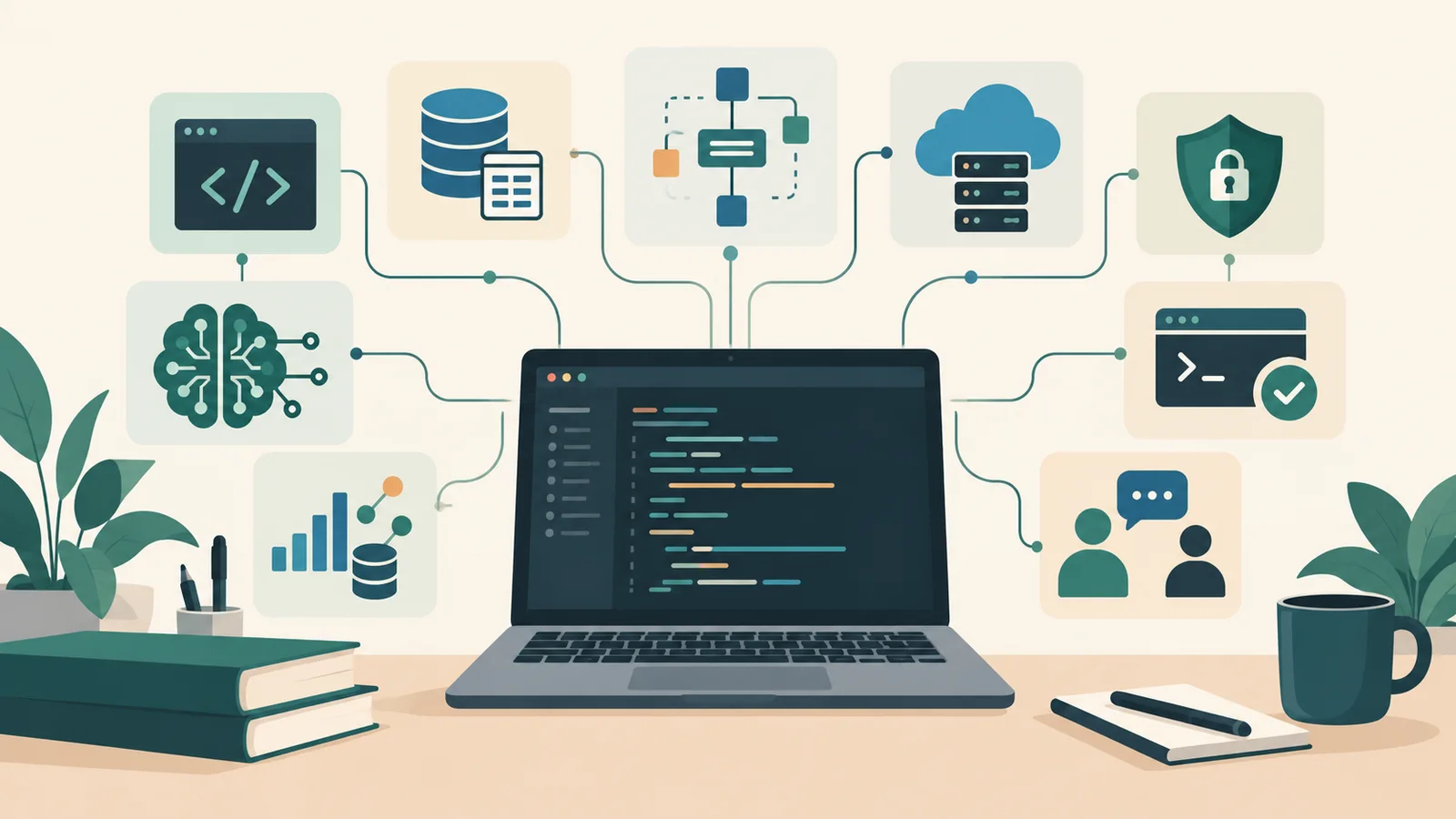
A better goal is to build an AI-resilient skill stack: skills that remain valuable even as AI writes more code because they involve understanding systems, defining the right problem, making architecture decisions, verifying AI output, protecting production systems, working with data and taking responsibility for results.
For a Computer Science graduate, the strongest long-term skill areas are:
- Computer Science fundamentals
- Programming with Python + one production language
- SQL, databases and data modelling
- AI-assisted software engineering
- APIs, backend development and system design
- Cloud, Linux, containers and DevOps
- Cybersecurity and secure engineering
- Data engineering
- AI/ML engineering and LLM application development
- Testing, debugging, observability and verification
- Product thinking and domain knowledge
- Communication, collaboration and continuous learning
The key idea is simple:
Do not compete with AI at typing code. Learn to use AI to build, verify and operate real systems.
Why “AI-Proof” Is the Wrong Goal
AI tools are already part of mainstream software development. GitHub's 2025 Octoverse reported that generative AI had become standard in development workflows, while Stack Overflow's 2025 Developer Survey found widespread AI-tool usage.
At the same time, developers remain cautious about correctness. Stack Overflow found that more developers distrusted AI accuracy than trusted it, and “almost right” AI-generated solutions were a major source of frustration.
That makes verification, architecture, debugging, testing, security and systems understanding more important — not less.
The safest strategy is therefore not to avoid AI. It is to become the engineer who can:
- give AI the right context
- decompose complex problems
- review generated code
- detect subtle errors
- design maintainable systems
- secure and monitor production
- connect software to business goals
Tier 1 — Durable Computer Science Foundations
These are the skills that make every higher-level technology easier to learn.
Data Structures and Algorithms
Learn:
- arrays, strings and linked lists
- stacks and queues
- trees and graphs
- hash tables
- searching and sorting
- recursion
- dynamic programming
- time and space complexity
Why it remains valuable: AI can generate an implementation, but you still need to judge complexity, trade-offs and correctness.
Operating Systems
Learn:
- processes and threads
- memory
- filesystems
- concurrency
- scheduling
- permissions
- system calls
Why it remains valuable: Production bugs often come from behaviour below the application layer.
Computer Networks
Learn:
- TCP/IP
- HTTP/HTTPS
- DNS
- routing
- sockets
- load balancing
- proxies
- TLS
- common network failures
Why it remains valuable: Almost every modern application is distributed.
DBMS and Data Modelling
Learn:
- relational modelling
- normalisation
- indexes
- transactions
- isolation
- query planning
- replication
- caching
- NoSQL trade-offs
Why it remains valuable: AI-generated applications still fail when the underlying data model is poor.
Tier 2 — Programming Languages Worth Learning
Do not try to learn ten languages.
A strong combination is:
Python
Best for:
- AI/ML
- data
- automation
- backend services
- scripting
GitHub's 2025 Octoverse found Python remained dominant in AI-focused repositories and powered nearly half of new AI repositories.
TypeScript
Best for:
- modern frontend development
- full-stack applications
- Node.js backends
- typed web systems
TypeScript became the most-used language on GitHub by monthly contributors in 2025.
One enterprise/systems language
Choose one based on your target role:
- Java — enterprise applications, banking, backend systems
- C# — .NET, enterprise/cloud applications
- Go — cloud infrastructure, networking and backend systems
- C++ — systems, high-performance computing, embedded or low-latency work
- Rust — systems and security-conscious software where memory safety matters
Recommended baseline: Python + TypeScript + one deeper backend/systems language.
Tier 3 — SQL and Data Skills
SQL is increasingly important even outside dedicated data roles.
Learn:
- SELECT, JOIN, GROUP BY
- CTEs
- window functions
- indexes
- query optimisation
- schema design
- transactions
- PostgreSQL or another major relational database
Then add:
- data modelling
- ETL / ELT concepts
- data quality
- batch vs streaming
- analytics fundamentals
LinkedIn's India Skills on the Rise 2026 highlights querying, database optimisation, data analysis, data storytelling and data ethics as fast-growing skills.
Tier 4 — AI-Assisted Software Engineering
Using AI coding tools is becoming normal. The valuable skill is not simply prompting them.
Learn how to use AI for:
- code generation
- refactoring
- test generation
- code explanation
- documentation
- debugging hypotheses
- migration assistance
- code review support
But also learn to:
- define acceptance criteria
- provide useful context
- break work into bounded tasks
- verify output
- review diffs
- run tests
- measure performance
- check security implications
GitHub's research describes the AI-era developer increasingly around understanding, directing and verifying work.
Tier 5 — Backend, APIs and System Design
AI can scaffold an application quickly. Production engineering is harder.
Learn:
- REST APIs
- HTTP deeply
- authentication and authorisation
- OAuth / OIDC basics
- API versioning
- queues
- caching
- rate limiting
- background jobs
- microservices vs monoliths
- event-driven systems
- consistency
- fault tolerance
Useful technologies:
- FastAPI / Django / Flask
- Node.js / NestJS
- Spring Boot
- PostgreSQL
- Redis
- Kafka or another event-streaming platform
Then study system design:
- scalability
- availability
- reliability
- latency
- observability
- failure recovery
- cost trade-offs
Tier 6 — Cloud, Linux and DevOps
Every developer benefits from knowing how software actually runs.
Learn:
Linux
- shell
- processes
- permissions
- files
- networking tools
- logs
Git and GitHub
- branching
- pull requests
- merge/rebase
- code review
- CI workflows
Containers
- Docker
- images
- volumes
- networking
- container security
Cloud
Choose one:
- AWS
- Azure
- Google Cloud
Understand:
- compute
- storage
- managed databases
- IAM
- networking
- serverless
- monitoring
DevOps
Learn:
- CI/CD
- Infrastructure as Code
- Terraform basics
- Kubernetes fundamentals
- deployment strategies
- rollback
- secrets management
LinkedIn's 2026 India data highlights cloud infrastructure, IT automation, incident management and real-time monitoring as fast-growing skills.
Tier 7 — Cybersecurity and Secure Engineering
Cybersecurity is one of the strongest AI-resilient areas because security requires adversarial thinking, accountability and continuous adaptation.
Every CS graduate should understand:
- secure coding
- authentication
- authorisation
- encryption basics
- OWASP Top 10
- secrets management
- IAM
- network security
- cloud security
- logging
- threat modelling
- incident response
- supply-chain security
For deeper roles, add:
- SOC tooling
- SIEM
- threat detection
- vulnerability management
- penetration testing
- DevSecOps
- identity security
The World Economic Forum lists networks and cybersecurity among the fastest-growing skill areas through 2030.
Tier 8 — Data Engineering
AI systems need reliable data.
Learn:
- SQL
- Python
- ETL / ELT
- data warehouses
- data lakes
- schemas
- data pipelines
- batch processing
- streaming
- data quality
- orchestration
Useful tools:
- PostgreSQL
- Spark / PySpark
- Kafka
- Airflow
- dbt
- Databricks
- cloud data warehouses
Why this is durable:
AI can generate code, but organisations still need engineers to move, clean, govern and operate real data reliably.
Tier 9 — AI/ML Engineering and LLM Applications
You do not need to become an AI researcher to remain competitive.
A software engineer should understand:
Machine-learning basics
- supervised vs unsupervised learning
- train/validation/test splits
- overfitting
- metrics
- model evaluation
LLM application engineering
- model APIs
- prompt design
- structured outputs
- embeddings
- vector databases
- RAG
- tool/function calling
- agents
- evaluation
- guardrails
- latency and cost
- model security
- LLMOps
India's LinkedIn Skills on the Rise 2026 highlights prompt engineering, workflow automation, LLMOps, AutoML and APIs as fast-growing AI/automation skills.
The important skill is not memorising today's framework. It is understanding how to design, evaluate and operate AI-powered systems.
Tier 10 — Testing, Debugging and Observability
As AI generates more code, verification becomes more valuable.
Learn:
Testing
- unit tests
- integration tests
- end-to-end tests
- contract tests
- regression testing
Debugging
- logs
- stack traces
- debuggers
- profiling
- root-cause analysis
Observability
- metrics
- logs
- traces
- dashboards
- alerts
- SLOs and SLIs
Useful tools may include:
- OpenTelemetry
- Prometheus
- Grafana
- ELK / OpenSearch
- cloud monitoring products
Stack Overflow's developer research shows that inaccurate or nearly-correct AI-generated output remains a major pain point, reinforcing the value of verification.
Tier 11 — System Architecture and Technical Judgment
Architecture is harder to automate than syntax because it depends on context.
Develop the ability to answer:
- What should we build?
- What should we not build?
- What should be a service vs a library?
- Which database fits?
- Where can this fail?
- What are the security risks?
- What will this cost at scale?
- What trade-offs are acceptable?
- How will we migrate later?
Study:
- architecture patterns
- distributed systems
- reliability
- scalability
- domain-driven design basics
- API and data contracts
- technical decision records
Tier 12 — Human Skills That Become More Valuable with AI
The World Economic Forum's Future of Jobs research highlights analytical thinking, creative thinking, resilience, flexibility, systems thinking, leadership and lifelong learning alongside technical skills.
For a CS graduate, especially develop:
Problem framing
Turning a vague request into a precise engineering problem.
Communication
Explaining trade-offs to technical and non-technical people.
Product thinking
Understanding the user and business outcome.
Collaboration
Working with product, design, security, data and operations teams.
Domain knowledge
Understanding the industry in which software is used.
Examples:
- banking + software
- healthcare + software
- cybersecurity + cloud
- automotive + embedded systems
- finance + data engineering
Domain knowledge makes an engineer harder to replace because the value is not just coding.
What Not to Treat as a Standalone Career Skill
Prompt engineering alone
Prompting is useful, but it is becoming a normal part of many roles rather than a durable standalone profession.
Pair it with:
- software engineering
- data
- automation
- AI application development
- domain expertise
One framework
React, Angular, Django, Spring, LangChain and similar frameworks can change.
Learn the concepts underneath them.
Pure boilerplate coding
AI is increasingly strong at:
- CRUD scaffolding
- repetitive UI
- basic scripts
- simple transformations
- documentation drafts
Do not build your entire career around work that is easy to specify and verify.
Recommended Skill Stacks by Career Goal
Software Engineer
Learn:
- DSA
- one strong backend language
- TypeScript
- SQL
- APIs
- Git
- Linux
- Docker
- cloud
- testing
- system design
- AI coding tools
AI Engineer
Learn:
- Python
- SQL
- ML fundamentals
- PyTorch or TensorFlow
- APIs
- embeddings
- vector databases
- RAG
- agents
- evaluation
- LLMOps
- cloud deployment
Data Engineer
Learn:
- Python
- SQL
- data modelling
- Spark
- Kafka
- Airflow
- dbt
- cloud
- warehouses/lakes
- data quality
Cybersecurity Engineer / Analyst
Learn:
- networking
- Linux
- Python
- security fundamentals
- IAM
- cloud security
- SIEM
- threat detection
- incident response
- secure development
Cloud / DevOps / Platform Engineer
Learn:
- Linux
- networking
- Python or Go
- Git
- Docker
- Kubernetes
- CI/CD
- Terraform
- cloud
- observability
- security
A Practical 12-Month Learning Priority
Months 1–3 — Core foundations
- Python
- DSA
- SQL
- Git
- Linux
- networking basics
Months 4–6 — Build software
- backend development
- APIs
- PostgreSQL
- testing
- Docker
- one full project
Months 7–9 — Infrastructure + AI
- cloud fundamentals
- CI/CD
- observability
- AI-assisted coding
- LLM APIs
- RAG basics
Months 10–12 — Specialise
Choose one:
- software/backend engineering
- AI engineering
- data engineering
- cybersecurity
- cloud/platform engineering
Build 2–3 strong projects in the chosen direction.
What Current Evidence Suggests
The World Economic Forum's Future of Jobs 2025 ranks AI and big data, networks and cybersecurity, and technological literacy among the fastest-growing skills through 2030, while also emphasising analytical thinking, creative thinking, resilience and lifelong learning.
LinkedIn's 2026 India skills data points toward a hybrid profile: AI and automation, data/querying, cloud infrastructure, cybersecurity, monitoring and collaboration.
GitHub's 2025 Octoverse shows software development itself remains highly active, but AI has become part of the default developer workflow. TypeScript became GitHub's most-used language by monthly contributors, while Python remains dominant in AI-focused repositories.
Stack Overflow's 2025 Developer Survey shows developers are using AI widely but remain cautious about accuracy. That makes technical judgment and verification a central part of modern software engineering.
Primary Sources
- World Economic Forum — Future of Jobs Report 2025: https://www.weforum.org/publications/the-future-of-jobs-report-2025/
- LinkedIn Skills on the Rise 2026 — India: https://www.linkedin.com/pulse/linkedin-skills-rise-2026-fastest-growing-india-linkedin-news-india-n08sf
- LinkedIn Skills on the Rise 2026 — Engineering: https://www.linkedin.com/pulse/linkedin-skills-rise-2026-10-fastest-growing-engineering-yykwf
- LinkedIn Skills on the Rise 2026 — Information Technology: https://www.linkedin.com/pulse/linkedin-skills-rise-2026-10-fastest-growing-information-hfgcf
- GitHub Octoverse 2025: https://github.blog/news-insights/octoverse/octoverse-a-new-developer-joins-github-every-second-as-ai-leads-typescript-to-1/
- GitHub — new identity of a developer in the AI era: https://github.blog/news-insights/octoverse/the-new-identity-of-a-developer-what-changes-and-what-doesnt-in-the-ai-era/
- Stack Overflow Developer Survey 2025: https://survey.stackoverflow.co/2025/
- Stack Overflow 2025 AI section: https://survey.stackoverflow.co/2025/ai