
How to Close a Loan in India: NOC, Documents, Credit Report and Lien Removal
Close your personal, home or vehicle loan correctly in India. Check final dues, obtain a no-dues certificate, recover original documents, remove liens and verify credit reports.
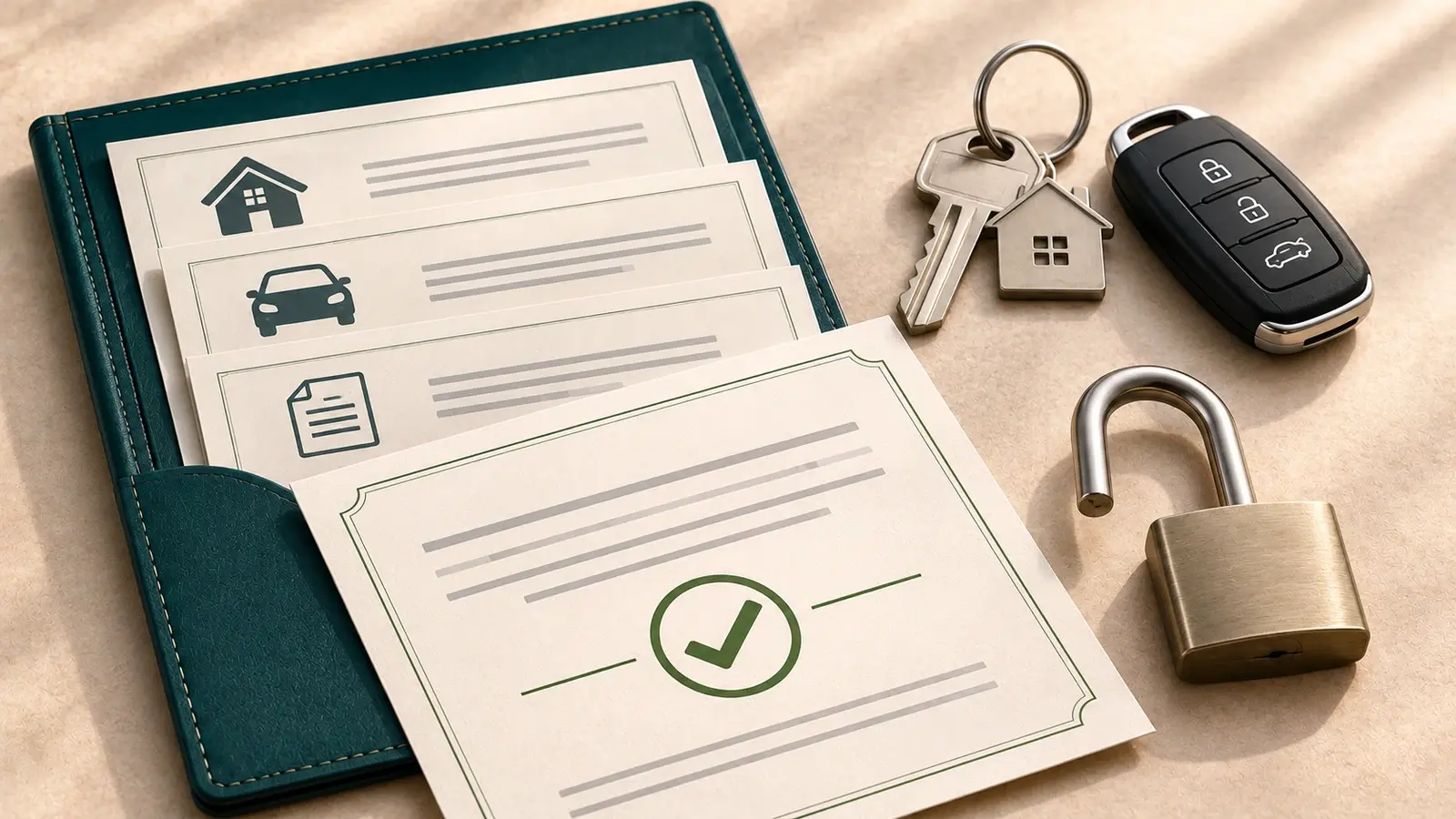
Quick Answer
Paying the last EMI does not automatically complete every loan closure formality. In India, confirm that the lender has closed the account, obtain written proof of repayment, recover any security held by the lender and verify that your credit reports and relevant asset records have been updated.
| Loan type | What to obtain or verify |
|---|---|
| Unsecured personal or education loan | Closure certificate, final statement and credit-report status |
| Home loan | Above, plus original property papers and release of mortgage/registered charges |
| Car or bike loan | Above, plus financier clearance and removal of hypothecation from the RC |
| Loan against a fixed deposit | Release of the deposit lien, where no other obligation secures it |
| Gold loan | Return and verification of pledged ornaments |
1. Confirm the final amount payable
For scheduled repayment, check that the final EMI has been credited and no residual interest, charges or arrears remain. For early closure (foreclosure), request a written payoff statement valid for your intended payment date.
Check the outstanding principal, interest up to the payment date, applicable charges and any unapplied credits. Pay through the lender's authorised channel and keep the receipt. A part-payment or a zero balance on a reusable credit facility does not necessarily close the account; request formal closure.
Under RBI's prepayment rules, covered floating-rate loans to individuals for non-business purposes, sanctioned or renewed from 1 January 2026, cannot attract prepayment charges, regardless of funding source or lock-in period. Older loans may also qualify under earlier rules; fixed-rate loans require separate checks.
2. Collect written closure proof
Ask the lender for:
- No-dues certificate or loan closure certificate (often called an NOC).
- Final loan statement showing zero outstanding dues and confirmation of the closure date.
- Return or cancellation of unused post-dated cheques, if applicable.
- Written confirmation that the loan-specific NACH, ECS or other repayment mandate will no longer be used.
Verify your name, loan account number and, where applicable, asset details. Do not stop scheduled payments before the lender confirms full repayment. After closure, check that no further EMI is debited; cancel any remaining loan-specific mandate through the appropriate channel.
3. Recover documents and remove security interests
Home loan
Compare the returned originals with the lender's list of documents deposited at sanction. Check sale deeds, title-chain papers and other applicable originals before acknowledging receipt. Report missing or damaged documents in writing.
Request proof that the lender has recorded satisfaction of any charge with CERSAI, where applicable. If a mortgage was registered locally, ask about the necessary release or cancellation at the sub-registrar's office. Procedures vary by state; the NOC alone may not clear every registry entry. See this bank's home-loan closure FAQ for an example of these formalities.
Vehicle and other secured loans
For a vehicle loan, obtain financier clearance and complete the hypothecation termination procedure through the applicable RTO/VAHAN service, including Form 35 as required. Verify the updated RC and request removal of the financier endorsement on your insurance policy.
For deposit-backed loans, confirm that the deposit is available without the loan-related lien. If other liabilities remain secured by the same asset, clarify the release conditions. For pledged gold, check the returned articles against the original inventory before signing.
4. Know the RBI document-release deadline
For covered personal loans (including eligible housing and vehicle loans), RBI's responsible lending directions require original property papers to be returned and registered security charges removed within 30 days of full repayment or settlement.
If the lender causes a delay in returning documents or filing charge satisfaction, compensation is ₹5,000 per day beyond the applicable deadline. The lender must explain the delay. For lost or damaged originals, it must assist with replacements and cover the associated costs; the compensation clock in this case starts after 60 days in total.
This is not a blanket penalty for every delayed NOC or RTO processing delay. For gold or silver loans covered by the separate RBI collateral rules, return is due on the repayment day or within seven working days at most; lender-caused delay beyond that deadline attracts ₹5,000 per day.
5. Verify your credit reports
After the lender's reporting cycle, check your full credit reports with CIBIL, Experian, Equifax and CRIF High Mark. Look for the correct closure date, zero current balance and zero overdue amount. A fully repaid loan should normally be marked closed, not settled (which can indicate a negotiated payment below the full amount). Accurate past repayment history remains on the report.
If details are wrong, file a dispute with the lender and affected credit bureau, attaching your closure proof. RBI's correction framework provides ₹100 per calendar day for qualifying complaints unresolved after 30 calendar days from initial filing. This is a different rule from the property-document compensation.
For help accessing reports, see our credit score and report guide.
6. If the lender does not complete closure
Submit a written grievance to the lender's complaint officer, listing the pending actions, payment date and applicable deadlines. Keep acknowledgements and copies of all documents. If the response is unsatisfactory or the applicable complaint-response period expires (normally 30 days), eligible complaints can be escalated free through RBI CMS. Under the 2026 Ombudsman Scheme guidance, file within 90 days of the applicable response deadline or the lender’s last communication, whichever is later. Check the eligibility conditions.
Keep your closure certificate and security-release evidence safely even after the credit report is corrected. They may be needed when selling the asset, applying for another loan or disputing an incorrect charge.
If the lender’s update is missing or inaccurate, follow the credit-report dispute checklist.