
New Car Pre-Delivery Inspection (PDI): Checklist Before Taking Delivery
Inspect your new car before taking delivery in India with a practical PDI checklist covering VIN, paint, tyres, features, mechanical condition, documents and defects.
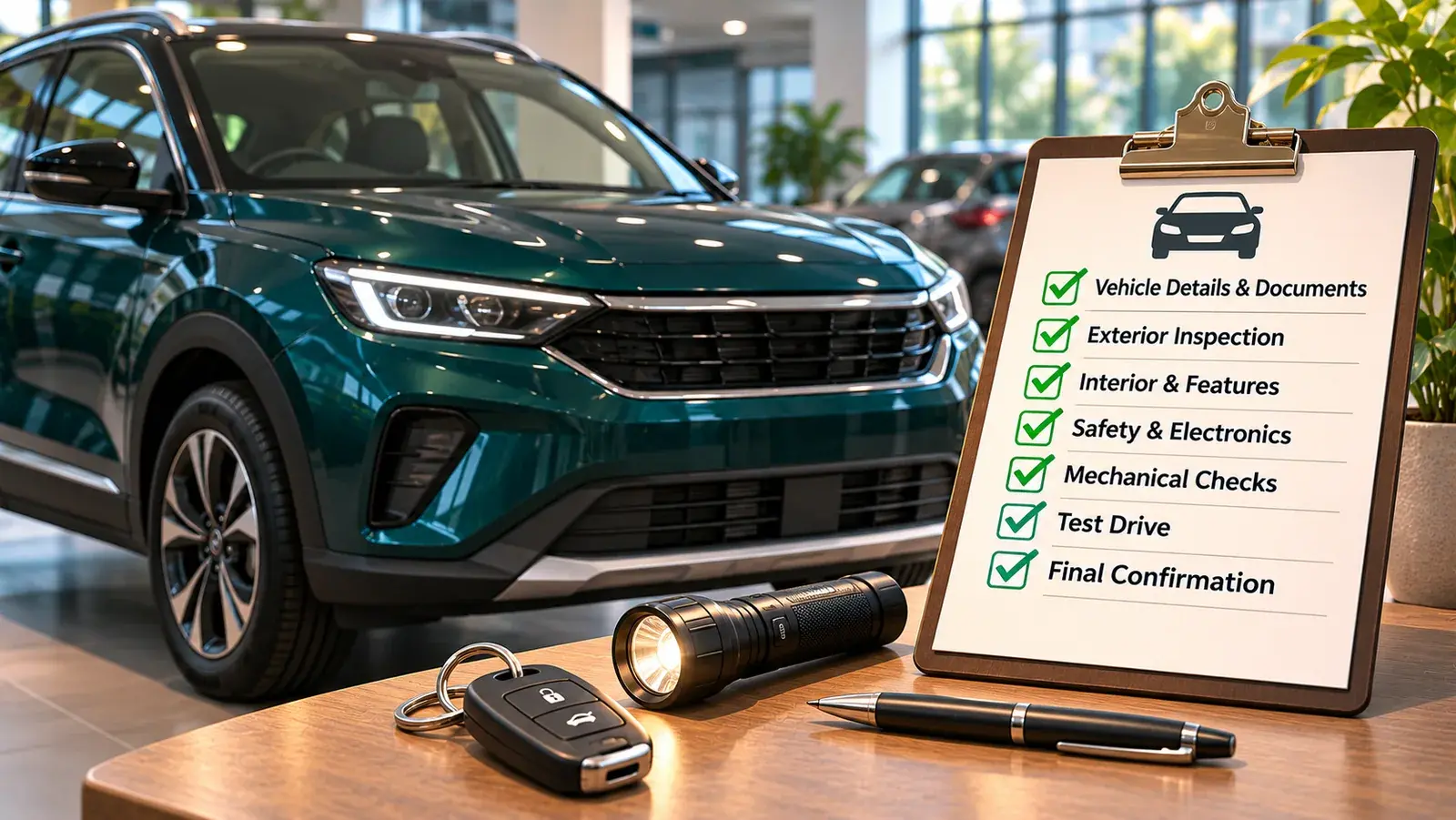
Quick Answer
A pre-delivery inspection (PDI) is your opportunity to examine the actual car allocated to you, not a showroom display or demonstrator. Arrange it before registration and final payment or loan disbursement where possible, subject to the agreed purchase terms. Repeat the essential checks before accepting delivery.
Set aside around 45–60 minutes in daylight. Take a phone camera, torch, booking details and, if possible, someone experienced with cars.
| Check | What you want to confirm |
|---|---|
| Vehicle identity | Correct VIN, variant, colour and build date |
| Physical condition | No unexplained damage, repairs or water ingress |
| Safety and functions | No unresolved faults; promised features work |
| Documents | Correct invoice, registration and active insurance |
| Handover | Keys, accessories and agreed items present |
Do not sign an unconditional delivery acceptance if a significant defect remains unresolved.
1. Verify the car before registration
- VIN (chassis number): Match the physical number against the dealer's allocation details and available paperwork. Photograph it for your records.
- Manufacturing date: Ask the dealer to confirm the month and year using manufacturer records. VIN date codes vary by brand. Older stock is not automatically defective; ask about storage, condition and any agreed discount.
- Specification: Confirm the exact trim, engine or battery configuration, transmission, colour and options against your booking.
- Odometer: Record the reading. Some kilometres are normal from factory checks and logistics. Ask for a written explanation if the reading seems unusually high; there is no universal acceptable limit.
- History: Ask whether the car was previously a demonstrator, damaged in transit, repaired or repainted. Request the dealer's inspection record and confirmation of completed applicable recall or service campaigns.
2. Inspect the exterior, wheels and cabin
Walk around the clean, dry vehicle in good light before sitting inside.
| Area | Inspect for |
|---|---|
| Body and paint | Dents, scratches, colour differences, overspray and irregular panel gaps |
| Glass and lights | Cracks, chips, damaged housings and abnormal moisture |
| Doors, bonnet and boot | Smooth closing, working locks and intact rubber seals |
| Tyres and wheels | Cuts, bulges, flat spots, damaged rims, correct specification and reasonable tyre age |
| Visible underside | Scrapes, leaks, unusual corrosion or impact marks |
| Cabin and boot | Torn trim, stains, damp carpets, water marks and musty smells |
Ask the dealer to use the recommended cold tyre pressures from the vehicle label or manual, not the maximum pressure printed on the tyre. Never crawl beneath an unsupported vehicle; ask for a workshop lift inspection if needed.
3. Test the features and safety equipment
Use the booked variant's equipment list. Ask the salesperson to demonstrate unfamiliar controls.
- Cabin: Seat adjustments, seat belts, horn, windows, locks, mirrors, wipers and washers.
- Comfort: Air conditioning, heater, blower speeds, vents and sunroof, where fitted.
- Electronics: Instrument display, infotainment, speakers, phone pairing, USB ports and charging points.
- Visibility: Headlamps, indicators, brake lamps, reverse lights, cameras and parking sensors. Ask someone to help check the external lights.
- Safety: Check that startup self-tests finish normally according to the owner's manual. Unexplained ABS, airbag, steering, brake or powertrain warnings require diagnosis.
Do not try to trigger airbags, emergency braking or other driver-assistance interventions yourself. Request a safe demonstration where appropriate.
4. Check mechanical condition and take a short drive
Ask the technician to show you the engine bay and check relevant fluid levels, battery condition, connections and signs of leaks with the vehicle safely switched off. Never open a hot coolant cap.
With permission, arrange a short drive in a suitable area. A public-road drive requires valid registration and insurance; let the dealer arrange any legally permitted pre-registration test.
Check for abnormal noise, vibration, steering pull, inconsistent braking and problematic gear engagement. If a drive is unavailable, request a technician's demonstration and arrange the earliest permitted check.
Extra checks by powertrain:
- CNG: Confirm factory-fitted or approved equipment as booked; ask for a fuel-switching demonstration and technician confirmation of leak checks. Do not manipulate gas fittings.
- EV or plug-in hybrid: Verify charge level, charging port, supplied cable, agreed home-charger installation and battery warranty. Request a charging demonstration and professional inspection of suspected battery or underbody damage. Never touch high-voltage components.
5. Verify documents and included items
For an Indian purchase, check the following against your booking and actual car:
| Documents and items | Verify |
|---|---|
| Invoice and receipts | Price breakdown, discounts, VIN and paid amounts |
| Registration | Owner details, vehicle details, RTO fees and loan hypothecation if applicable |
| Form 21 and Form 22 | Sale certificate and manufacturer's roadworthiness certificate details |
| Insurance | Correct vehicle and owner, policy start date, chosen cover and add-ons |
| Warranty and service | Coverage, start date, service schedule and roadside assistance |
| Physical handover | All promised keys, manuals, accessories, toolkit and spare wheel or puncture kit as specified |
Confirm registration status and number plates as applicable, FASTag activation if required for your journey, and sufficient fuel or charge. If the RC is pending, obtain the registration acknowledgement and delivery timeline; ensure the vehicle is legally registered and insured before driving on public roads.
6. What if you find a defect?
| Finding | Recommended action |
|---|---|
| Missing accessory or small cosmetic flaw | Record it; agree a correction in writing and recheck |
| Warning light, leak or mechanical fault | Pause delivery until diagnosed and resolved |
| Suspected accident damage, flood damage or undisclosed major repair | Request another vehicle or independent assessment |
Photograph the problem, ask the dealer to acknowledge it in writing and escalate unresolved concerns to the manufacturer. If necessary, contact India's National Consumer Helpline on 1915. Replacement or refund depends on the facts, purchase terms and applicable rights.
7. Final checks on delivery day
Reconfirm the VIN, odometer, exterior condition, warning indicators, documents and agreed fixes. Check that accessory installation has caused no damage. Keep the inspection photos, invoices and written commitments.
Accept delivery only when you are satisfied with the car's condition and the paperwork. A buyer's PDI is not a substitute for professional mechanical or diagnostic inspection.
Sources and useful links
- Autocar India — New car delivery inspection
- Team-BHP — Pre-delivery inspection advice
- Haryana Transport — Registration of a new motor vehicle
- Telangana Transport — Permanent vehicle registration
- Tata Motors — Punch.ev owner's manual (PDF)
- National Consumer Helpline
- Related: Car Accessories That Are Actually Useful in India
Equipment and inspection procedures vary by model, dealer and state.