
How to Choose Cricket Helmets, Pads and Gloves: Safety, Size and Fit
Choose cricket batting protection that fits properly. Check helmet certification, ball-size compatibility, pad measurements, glove fit and buying priorities for hard-ball cricket.
Quick Answer
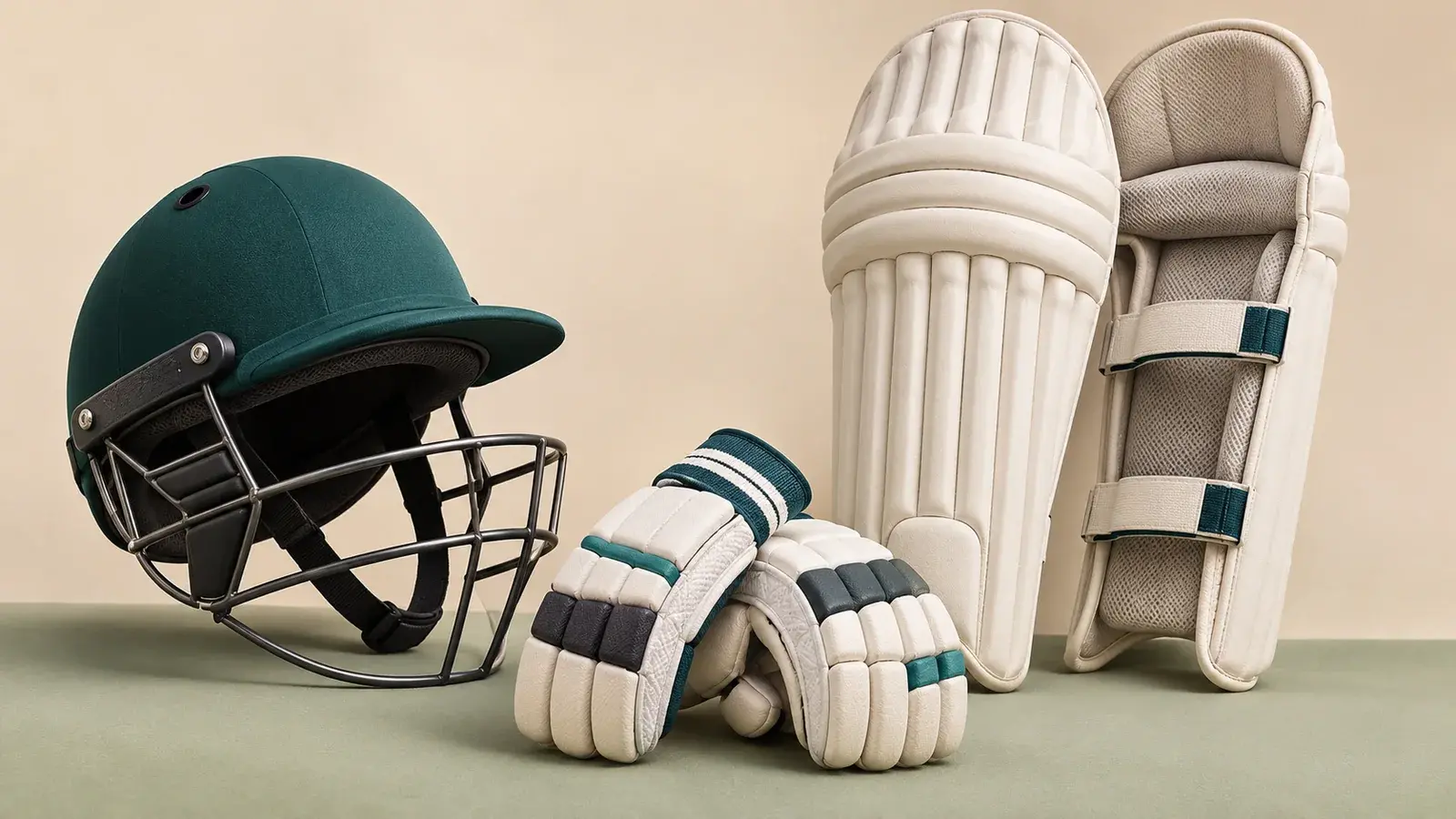
For leather-ball cricket, buy protective equipment that fits securely, covers vulnerable areas and allows natural movement. Do not choose oversized gear for children to grow into or spend your entire budget on a premium bat.
| Equipment | What to prioritise |
|---|---|
| Helmet | Cricket-specific safety certification, correct ball-size rating and secure fit |
| Batting pads | Knee alignment, shin coverage and freedom to run |
| Batting gloves | Finger, thumb and side protection with a comfortable grip |
Wear all three during hard-ball batting, including net practice, together with a suitable abdominal guard. Add thigh, arm and other protection according to your playing conditions and coach's advice. No protective equipment eliminates injury risk.
1. Choose the correct cricket helmet
Check the safety standard first
Look for BS 7928:2013+A1:2019 when buying new equipment. The 2019 amendment adds neck-protector requirements to the 2013 standard. Check the certification and ball-size label on the actual helmet, rather than relying only on the seller's description.
Cricket helmets can be tested against men's 5½ oz balls, junior 4¾ oz balls or both. Choose a helmet tested for the ball you face. For women's cricket, the ICC recommends a model tested with both sizes or at least the junior ball, because a smaller ball may penetrate an unsuitable faceguard opening.
Check the model against the ICC helmet guidance and compliant helmet list. The ICC also requires helmet use in specified high-risk international playing situations. Confirm your own academy or competition's requirements in India separately.
Measure and test the fit
- Wrap a flexible tape around your head, passing just above the eyebrows and ears.
- Compare the circumference in centimetres with the manufacturer's size chart.
- Try the helmet with its chin strap secured. It should sit low and level without painful pressure or excessive movement.
- Look ahead and down in your batting stance. You should see the ball clearly without tilting the helmet back.
- Check faceguard clearance and adjustment against the manufacturer's instructions. Never bend the grille or widen its opening to improve visibility.
See Masuri's helmet fitting guide for model-specific fitting considerations.
Steel or titanium? A certified steel-grille model is a sensible value choice. Titanium typically reduces weight but costs more. The material alone does not establish superior protection. Consider a compatible, certified neck protector for additional coverage behind the head and upper neck.
2. Choose batting pads that protect without restricting movement
Measure from your shoe's tongue area at the instep to the centre of your kneecap. Use that distance, not your overall height alone, to select a size.
When trying pads, wear your cricket shoes and check that:
- The knee sits centrally in the pad's knee pocket when standing and bending.
- The shin is covered, with protection extending above the knee.
- The lower edge rests comfortably near the shoe without obstructing your foot.
- The straps hold the pad in place without pinching or restricting circulation.
- You can squat, take a batting stride and jog without the pads colliding or slipping.
Traditional cane-and-foam designs and modern lightweight constructions can both be suitable. Compare actual fit, knee cushioning, protective coverage and mobility; do not judge impact protection by thickness or weight alone.
Check whether the pads are right-handed, left-handed or ambidextrous. Handed models must match your batting stance. See Kookaburra's pad selection guide.
3. Choose batting gloves with the right finger fit
Measure from the heel of your palm at the wrist crease to the tip of your middle finger. Match the result to the brand's chart, then try the gloves with your bat.
| Fit check | What you want |
|---|---|
| Fingers | No cramped fingertips or excessive empty space |
| Palm | Secure grip without loose material bunching up |
| Thumb and sides | Protective sections aligned with vulnerable areas |
| Wrist | Firm closure without restricted movement |
Traditional sausage-finger gloves and segmented designs are both worth trying. Segmented padding may feel easier to flex, but compare the actual coverage and grip rather than assuming one design is safer.
Select gloves for your batting handedness, not simply your dominant writing hand. For frequent leather-ball practice and faster bowling, prioritise reinforced finger, thumb and side protection over cosmetics or the lightest possible glove.
4. Measure before ordering online
| Item | Measurement |
|---|---|
| Helmet | Head circumference |
| Pads | Instep to kneecap centre |
| Gloves | Palm base to middle fingertip |
Use the exact model's sizing instructions. Junior, youth, adult and large labels are not interchangeable across brands. Gray-Nicolls and Kookaburra publish their own size charts. Check exchange terms before ordering, particularly for growing children.
5. Spend wisely and replace damaged equipment
In India, buy from a reputable sports shop or authorised seller that can confirm the exact model, sizing and certification. Prioritise a new certified helmet and well-fitting pads, gloves and guards before premium upgrades. Avoid used helmets with unknown impact history.
After a serious blow, remove the affected helmet from use and follow the maker's replacement instructions, even if damage is not visible. If concussion is suspected, stop playing and seek medical assessment; do not resume play that day. See Cricket Australia's concussion guidance.
Air-dry pads and gloves after practice and replace them if protective padding deteriorates, straps fail or structural protection is damaged. Follow the helmet maker's cleaning and service-life guidance.
For a child's complete starter kit, see our cricket equipment guide for children.
At a glance
Certified helmet
Best for: Priority purchase for leather-ball batting
Match the ball rating and measure head circumference. Try the helmet with the chin strap fitted.
Official sourceBatting pads
Best for: Secure knee and shin coverage
Measure instep to kneecap in cricket shoes. Jog and take a batting stride to check for slipping or collision.
Batting gloves
Best for: Hand protection with a secure grip
Measure to the middle fingertip, select gloves for your batting stance and try gripping your own bat.