
How to Choose the Right Cricket Bat: Size, Weight, Willow and Playing Style
Choose a cricket bat for your height, strength, ball type and batting style. Compare English and Kashmir willow, weight, pickup and sweet-spot profiles before buying.
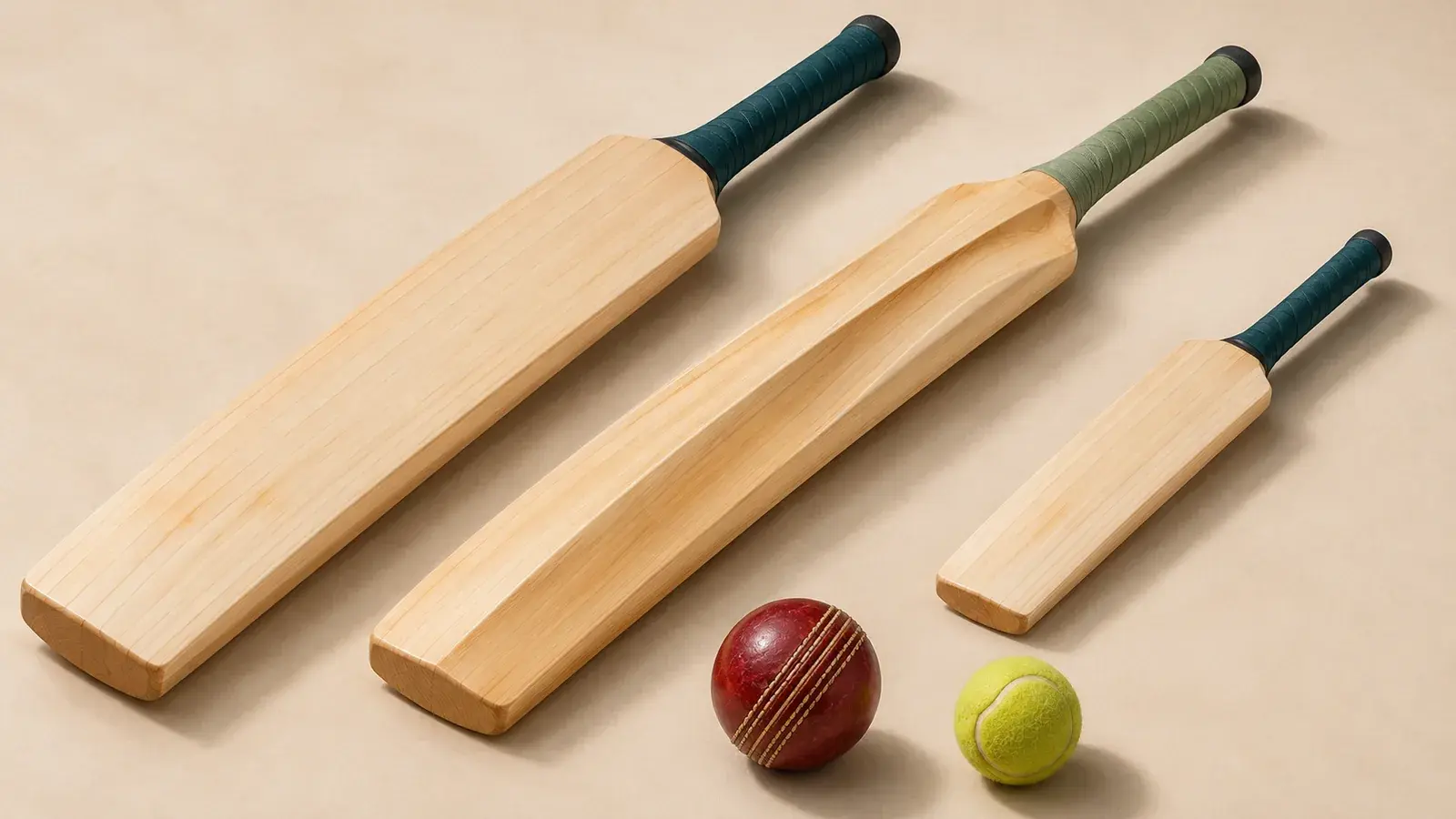
Quick Answer
Choose a cricket bat that suits your ball type, height and swing, rather than buying the most expensive willow or the heaviest blade.
| Your situation | What to look for |
|---|---|
| Gully or tennis-ball cricket | Lightweight bat designed for your ball type |
| Beginner in leather-ball cricket | Affordable Kashmir willow hard-ball bat |
| Regular club or academy player | Quality Kashmir willow or English willow, depending on budget |
| Child or developing player | Height-appropriate junior bat with easy pickup |
| Unsure about batting profile | Balanced bat with a middle sweet spot |
For adults using a full-size leather-ball bat, around 1,100–1,200 g is a useful range to try first, not a compulsory target. A bat that you can swing freely and control is usually a better purchase than one that looks impressive but feels cumbersome.
1. Choose the correct bat size
Start with the player's height, not age. The following approximate bands follow the Gray-Nicolls size guide, excluding specialist sizes.
| Player height | Size to try |
|---|---|
| Below 122 cm | 0 |
| 122–130 cm | 1 |
| 130–137 cm | 2 |
| 137–145 cm | 3 |
| 145–152 cm | 4 |
| 152–160 cm | 5 |
| 160–165 cm | 6 |
| 165–170 cm | Harrow |
| 170–175 cm | Smaller adult profile |
| 175 cm and above | Short Handle (SH) |
| 183 cm and above | Also try Long Handle (LH) or a longer blade |
Size names and height recommendations vary between manufacturers. At a boundary, try both sizes. Check your stance, backlift and whether the bat clears your pads naturally. Shorter adults can use youth or compact adult profiles if those fit better.
For children's complete kits, see our cricket equipment guide for children.
2. Get the weight and pickup right
Weight is what the scale measures. Pickup is how heavy the bat feels when lifted and swung. A bat carrying more mass towards its toe may feel harder to manoeuvre than another bat of identical weight.
Try this before buying:
- Hold the bat in your normal stance, preferably wearing batting gloves.
- Perform several controlled shadow drives, cuts and defensive strokes in a clear space.
- Check whether you can change direction and stop the swing comfortably.
- Compare a slightly lighter and heavier bat. Reject any that makes your wrists strain or your backlift sluggish.
Young players should use appropriately lighter junior bats, not adult weight targets. Stronger players can try heavier blades, but extra mass does not guarantee longer hits if bat speed or timing suffers. Pickup and weight advice.
3. English willow, Kashmir willow or tennis-ball bat?
| Option | Best use | Trade-off |
|---|---|---|
| Kashmir willow, leather-ball rated | Beginners, school and recreational hard-ball cricket | Often denser; compare pickup carefully |
| English willow, leather-ball rated | Frequent practice and competitive play | Usually more expensive; needs appropriate preparation |
| Dedicated tennis-ball bat | Gully cricket and tennis-ball tournaments | Not necessarily suitable for leather-ball impact |
Kashmir willow is a sensible value choice in India. English willow is worth considering when you play regularly and can afford a suitable individual bat. Do not sacrifice protective equipment to upgrade the willow.
Check the manufacturer's ball rating: SG, for example, sells both Kashmir willow leather-ball bats and Kashmir willow tennis-ball bats. They are not interchangeable merely because they use the same wood.
Willow grade and grains: grading varies by brand. Clean, straight grains can be desirable, but grain count alone cannot establish rebound, durability or quality. A sound lower-grade blade with comfortable pickup may suit you better than a premium one.
For model-specific shopping, see our English willow cricket bat buying guide.
4. Match the sweet spot to your playing style
The sweet spot is the blade region that delivers particularly effective contact. The position of the blade's thickest section, or swell, helps shape its hitting zone and balance.
| How you usually play | Profile to try |
|---|---|
| Front-foot drives; low-bouncing pitches | Low or mid-low |
| Mixed shots; varied pitches | Mid |
| Cuts, pulls and back-foot strokes; higher bounce | Mid-high |
| Quick placement and late adjustments | Easy pickup; often a balanced or higher profile |
Treat these as starting suggestions, not fixed rules. Indian pitches vary considerably. Choose according to where you actually strike the ball. For big hitting, compare full-profile bats only if you can maintain control and swing speed.
Try round and oval handles if available; the grip should feel secure without forcing your wrists into an awkward position.
5. Before paying: a buying checklist
- Inspect the face, edges, toe and handle for structural cracks, looseness or damage.
- Ask for the actual bat's weight with grip and fitted accessories, not just the catalogue range.
- Buy from an authorised or reputable seller; verify authenticity and retain the invoice.
- For online orders, check exchange terms before oiling or knocking in.
- For organised matches, confirm bat dimensions and permitted construction with your competition. The MCC's October 2026 Laws update expands laminated-bat eligibility, but local playing conditions still matter.
6. Prepare the bat before its first match
Follow your manufacturer's instructions for oiling and gradual knocking-in with a bat mallet. Even pre-prepared bats may require further preparation. Avoid direct blows to the sharp edges or toe. Begin with gentle practice using an older ball before progressing to harder bowling; follow the maker's advice if dents appear. Keep the bat dry and away from extreme heat.
Further reading: Gray-Nicolls bat care instructions.
Budget for properly fitted batting protection before spending extra on willow.
At a glance
Junior or compact bat
Best for: Children and players who find an adult bat hard to control
Try neighbouring sizes with batting gloves and pads. Choose the size that permits a free swing.
Official sourceLeather-ball bat
Best for: Academy and organised hard-ball cricket
Compare suitable Kashmir and English willow bats in person. Verify ball rating and competition rules before buying.
Dedicated tennis-ball bat
Best for: Tennis-ball matches
Use a bat designed for the ball you play with. Check the maker’s rating before using it against a leather ball.