UPI Transaction ID, UTR and RRN Explained: Which Number Helps You Track Payments and Refunds?
Understand UPI transaction IDs, UTR and RRN in India, find the right payment or refund reference, track failed transfers and claim eligible RBI compensation.
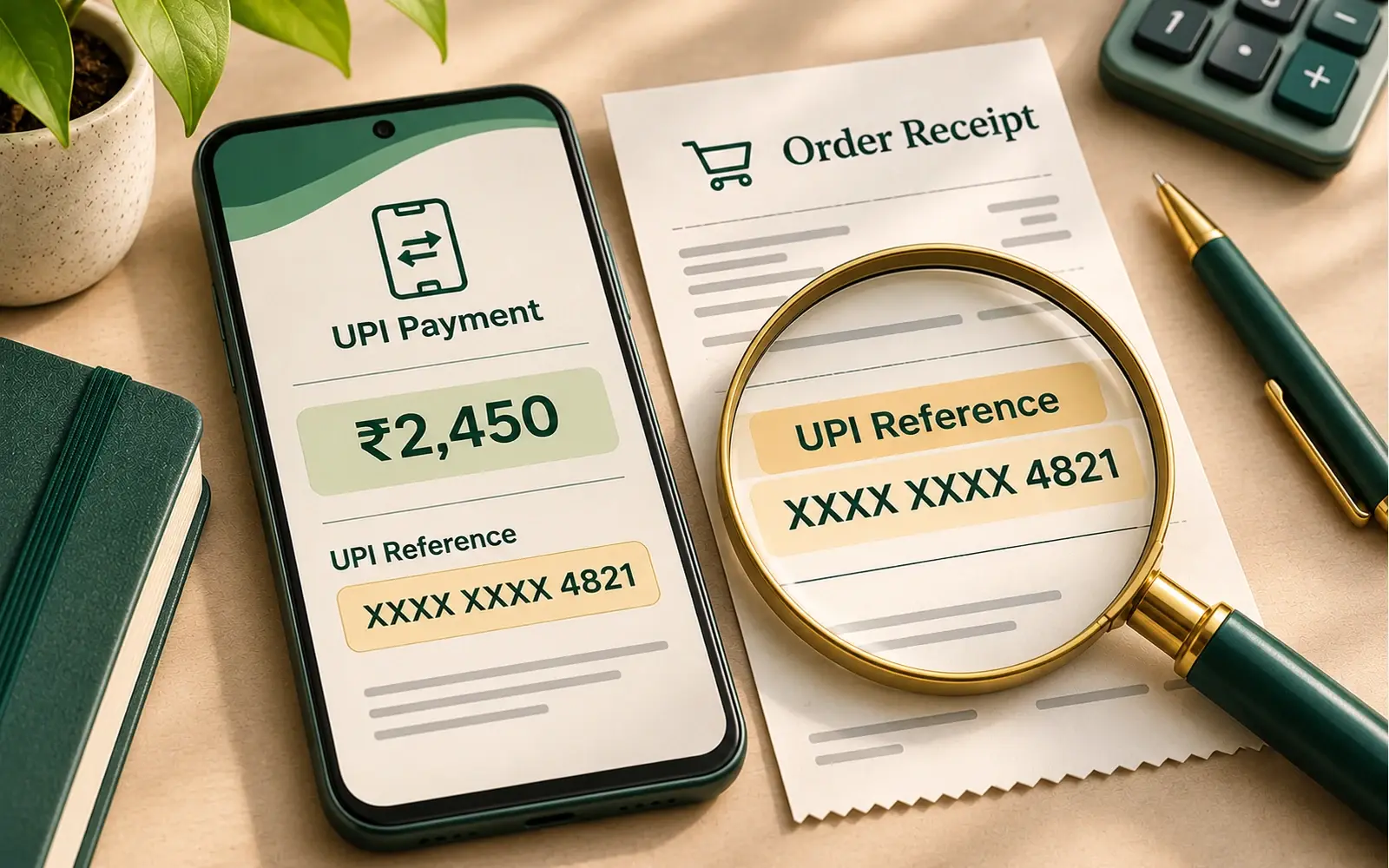
You pay ₹2,450 through UPI. Your bank account is debited, but the merchant says the payment has not arrived. The merchant asks for a UTR number, your payment app displays a UPI transaction ID, and your bank asks for an RRN. Are these three different numbers, or different names for the same number?
The answer is that the 12-digit UPI reference number, often called the RRN or UTR, is usually the most useful starting point when asking your bank to trace a UPI payment. A payment app, merchant or payment gateway may also maintain its own identifiers. For a merchant-initiated refund, the original payment reference alone may not be sufficient: ask for the reference associated with the refund itself.
Knowing which number to provide can save several rounds of customer support. But a reference number is not proof that money reached the intended account, and it cannot be used to independently access someone else's bank records.
UPI transaction ID, UTR and RRN: the differences at a glance
| Identifier | What it identifies | Who usually needs it |
|---|---|---|
| UPI transaction ID | A UPI transaction; the visible label may refer to the network reference or another transaction identifier | Payment app, bank or UPI support |
| UTR (Unique Transaction Reference) | A transfer reference; in consumer UPI apps, often the 12-digit UPI reference | Banks and payment support teams |
| RRN (Retrieval Reference Number) | The 12-digit numeric reference used to locate a UPI transaction in payment records | Banks, payment service providers and reconciliation teams |
| App transaction ID / gateway payment ID | A payment record in a particular provider's system | App or payment gateway support |
| Merchant order ID | An order or booking, which may have several payment attempts | Merchant or seller |
| Refund ID / refund reference | A particular refund instruction or the associated banking trace reference | Merchant, gateway or bank, depending on the field |
| Complaint reference number | A support or dispute case, not the transfer itself | Grievance and escalation teams |
The most important distinction is between the reference that helps financial institutions locate the money movement and the identifiers that help a particular business locate its own records.
Why UTR and RRN often mean the same thing in a UPI app
In a UPI context, RRN stands for Retrieval Reference Number. It is normally a 12-digit numeric field. Paytm's official help pages provide a useful illustration of the naming overlap: one describes the UPI reference as a UTR, while another identifies the 12-digit UPI reference as an RRN. Google Pay's instructions use the term UPI transaction ID when explaining how to match an app payment to a bank statement.
These terms are therefore not guaranteed to identify three different visible fields. When an app shows a 12-digit UPI reference and a support agent requests the UTR or RRN for that payment, the same number will frequently be what they need.
However, the technical transaction ID and the RRN can be distinct fields. A longer identifier shown separately in an app or gateway should not automatically be assumed to be the RRN. Do not truncate it, remove characters or try to calculate a 12-digit reference from it. If you cannot find the required field, ask the provider to identify the correct bank-traceable reference.
A UPI UTR is not the same format as every other bank transfer UTR
The word UTR is also used outside UPI. RBI's RTGS FAQ specifies a 22-character UTR for RTGS transfers. Its NEFT FAQ explains that a transfer reference, along with details such as the date, amount and bank IFSCs, can help the banks investigate an NEFT transfer.
Consequently, a form designed for RTGS may reject a 12-digit UPI reference, even though the reference is valid for UPI. Identify the payment method first. Do not use the 12-digit rule for every payment system, including NEFT, RTGS and card transactions.
A UPI ID is not a UPI transaction ID
A UPI ID, also known as a Virtual Payment Address (VPA), is an address used to route payments, often in a format resembling name@provider. You can use the same address for many payments. A transaction reference, by contrast, identifies a particular payment attempt or record.
A recipient's UPI ID helps describe where the funds were directed, but it does not tell the bank which specific ₹500 or ₹2,450 payment you are disputing.
Why a single payment can have several reference numbers
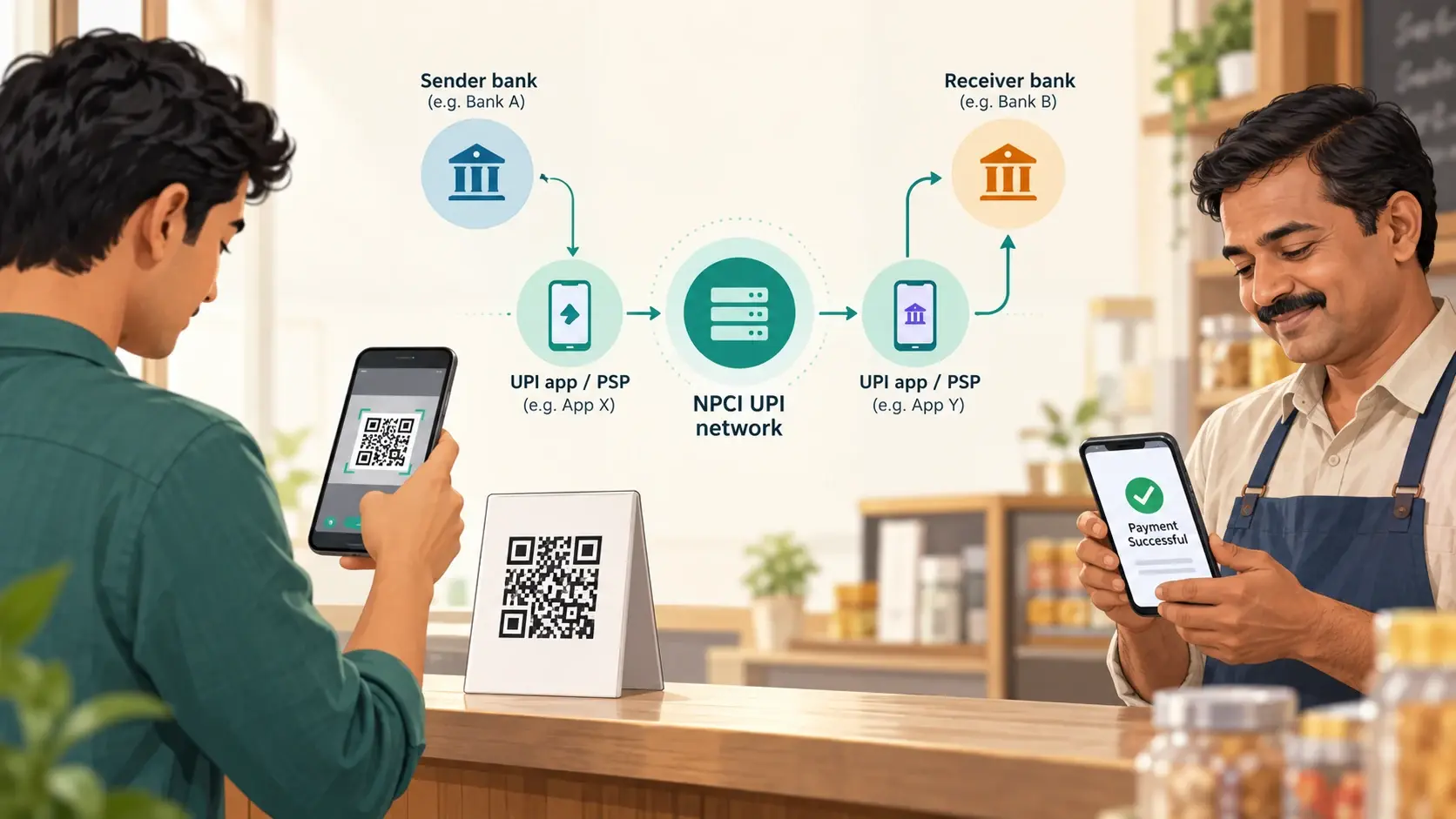
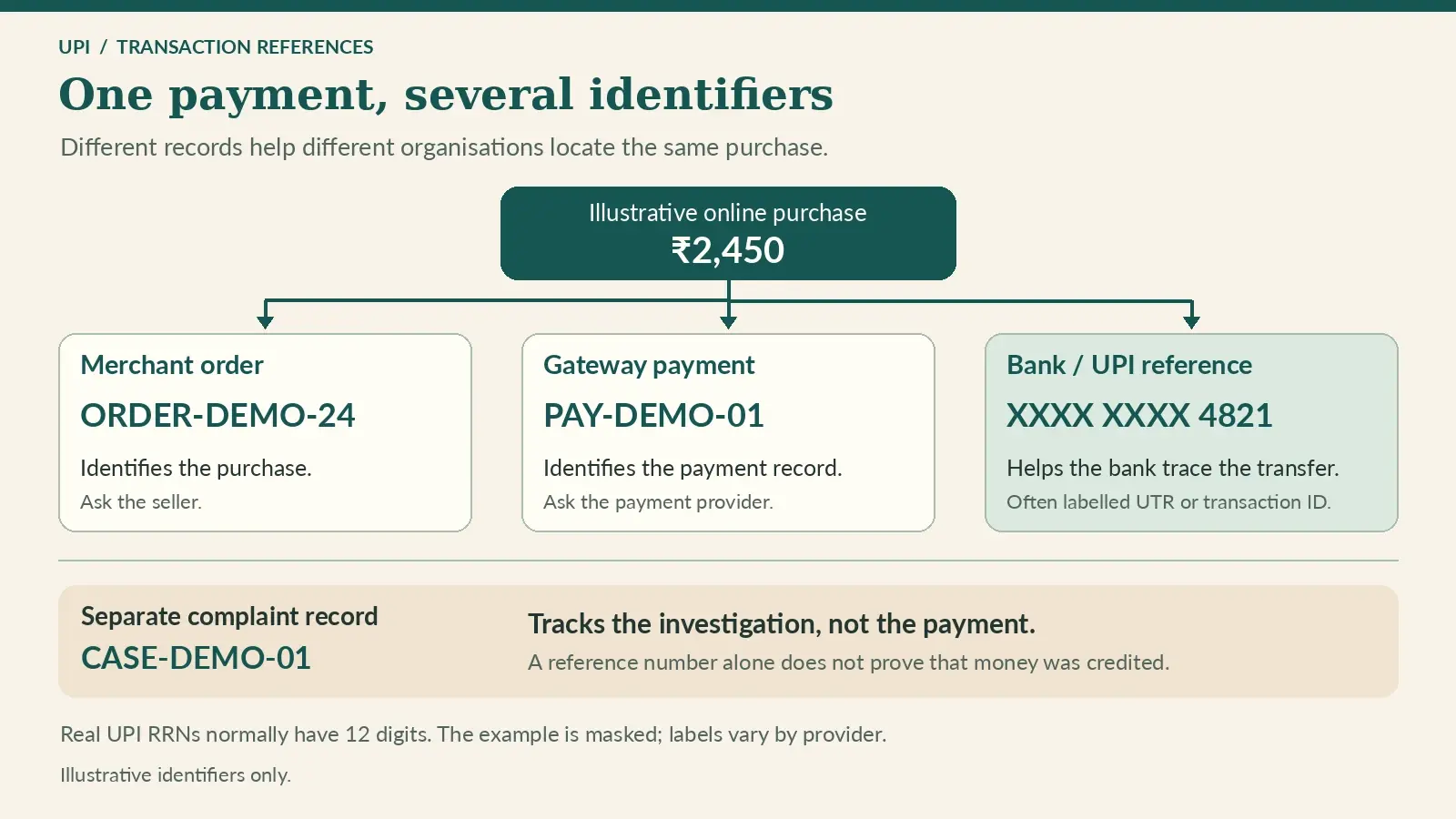
Imagine buying an item online. The merchant creates an order, its payment gateway creates a payment record, your UPI app initiates the payment, and the participating banks and UPI infrastructure process it. Each participant may need to reconcile the transaction against its own records.
Here is an illustrative ₹2,450 purchase. The identifiers below are deliberately fictional or masked; they do not represent a real payment.
| Record | Illustrative identifier |
|---|---|
| Merchant order | ORDER-DEMO-24 |
| Gateway payment | PAY-DEMO-01 |
| UPI network reference / RRN | XXXX XXXX 4821 (12 digits in the real record) |
| Payment amount | ₹2,450 |
| App support complaint | CASE-DEMO-01 |
The merchant can use its order ID to find the purchase. The gateway can use its payment ID to find the processing record. The bank can search its payment logs using the actual UPI reference together with the date, amount and relevant account information. The complaint number locates the subsequent investigation.
One order can also have multiple payment attempts, such as a failed attempt followed by a successful one. Giving the merchant just the order ID may not identify which debit should be refunded. Likewise, a single payment can generate several partial refunds. Each refund should be reconciled against the correct payment and amount.
A bank statement may abbreviate transaction narrations or combine a reference with other text. Do not assume the longest string of digits is the correct UTR; compare the records or request assistance from the bank.
Where to find the correct UPI reference number
Start with the app or service through which the payment was made, rather than looking for an independent UTR search website.
- Open the payment app and locate its transaction history.
- Select the exact transaction by date, amount and recipient or merchant.
- Expand the payment details, receipt or transaction information.
- Look for a field labelled UPI reference number, UPI transaction ID, bank reference, UTR or RRN. Record its label as well as its full value.
- Save the receipt and compare it with the corresponding debit or credit in your bank statement.
For Google Pay, the help centre explains matching the UPI transaction ID from the payment record with the bank entry. Paytm's support documentation directs users to the Balance & History area to locate the UPI reference. In PhonePe, the relevant payment record in the app is also the starting point for a transaction complaint. Menu names may change with app updates; the underlying task is to open the specific payment, not merely the account profile.
Check the account actually used for payment. A person may have several accounts linked to one UPI app. A bank statement for a different linked account will not show the debit or the subsequent reversal. Where a credit card or wallet funded the payment, consult the relevant issuer's transaction record instead.
If the reference is missing from the app or the statement, contact official support with the amount, time, recipient details and whatever transaction identifiers you have. A missing reference on the screen does not by itself mean the payment never happened.
Which number do you need in different payment situations?
| Situation | Most useful reference to start with | What to do next |
|---|---|---|
| Money debited, recipient not credited | Original UPI RRN / UTR | Raise a payment complaint and ask the bank to trace credit or reversal |
| Merchant says payment not received | Original RRN plus order or gateway payment ID | Ask merchant to reconcile the order; raise a payment dispute if necessary |
| Payment is pending | Original payment attempt reference | Check the final status before retrying |
| Merchant approved a refund | Order ID and gateway refund ID | Confirm refund initiation and obtain the refund's bank reference |
| Refund processed but not received | Refund RRN, UTR or other bank trace reference, as supplied | Ask the relevant bank or issuer to trace the refund credit |
| NEFT or RTGS transfer missing | Transfer-specific UTR | Contact the bank with transfer details |
| Existing complaint unresolved | Complaint number plus original payment references | Follow up or escalate through the applicable channel |
A single reference is useful, but providing the amount and date alongside it reduces ambiguity. Keep the original label rather than telling every support agent that all your IDs are UTR numbers.
How to track a UPI payment that is pending, failed or missing
A reference number may exist for a transaction that is unsuccessful. It identifies a record; it does not certify the final status of that record.
Pending payment
The app has not yet obtained or displayed a definitive outcome. Check its transaction status and the funding account, and ask the intended recipient to check their own account if practical. Do not immediately repeat the payment merely because the first screen timed out. A delayed success followed by a second successful attempt can result in two debits.
Failed payment with a debit
Save the original payment reference and the debit entry. Raise an issue against the particular payment in the UPI app and contact your bank if the funds have not returned. Depending on the transaction type, the failed-payment reversal framework may apply.
Successful payment that the recipient cannot locate
Ask the recipient to check the actual account statement, not just an SMS alert. Verify the beneficiary shown on your receipt, the payment amount and the date. If the merchant is using an acquiring bank or payment gateway, ask it to reconcile the payment against the order. An app's success label is useful evidence, but does not by itself prove that a merchant correctly allocated the payment to your purchase.
A successful payment sent to the wrong recipient is a different problem from a failed transaction. Contact your bank and payment provider immediately for available recovery or dispute options. Do not assume the payment can be automatically cancelled or that recovery is guaranteed.
RBI deadlines for failed UPI payments
RBI's harmonised failed-transaction framework sets outer resolution limits for specified domestic payment failures that are not attributable to the customer. For ordinary UPI fund transfers and merchant payments, the relevant categories are:
| Failure type | Outer reversal deadline if applicable | Delay compensation |
|---|---|---|
| Account debited but intended beneficiary not credited in a funds transfer | T + 1 calendar day, if credit cannot be completed | ₹100 per day beyond T + 1 |
| Account debited but payment confirmation not received at merchant location | T + 5 calendar days | ₹100 per day beyond T + 5 |
Here T means the transaction's calendar date, not the date you complained. Weekends and public holidays do not convert these limits into working-day deadlines. The framework requires applicable compensation to be paid automatically rather than only on demand. Its general instructions also distinguish the party entitled to compensation according to the type of failure; a bank must determine the applicable treatment in a particular case.
Worked example: the same date, different deadlines
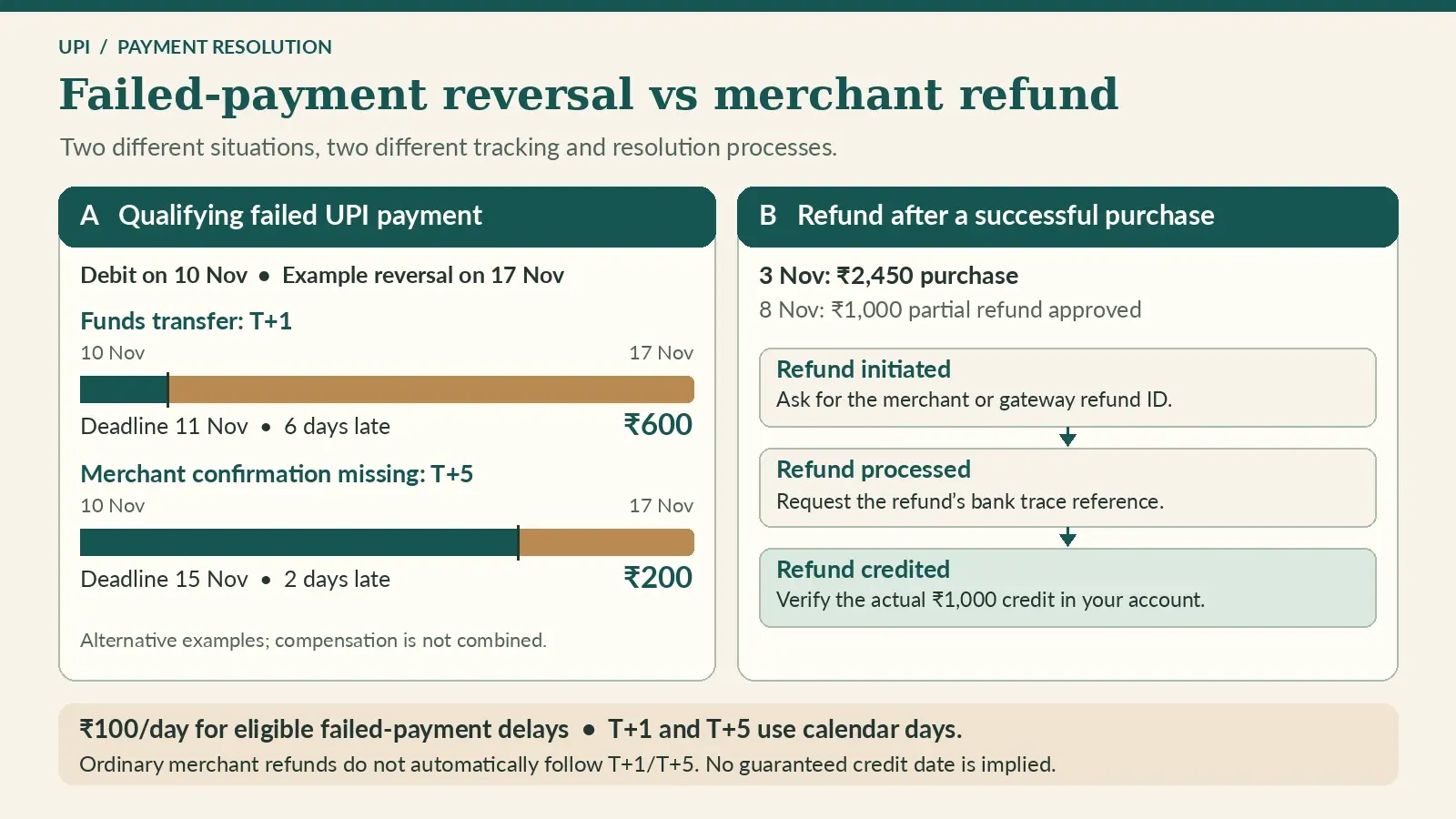
Suppose a qualifying UPI payment fails on 10 November and the amount is debited. Assume the reversal is completed on 17 November, with no earlier beneficiary credit.
- For a person-to-person transfer where credit could not be completed, the T + 1 deadline is 11 November. Reversal on 17 November is six calendar days beyond that deadline, corresponding to ₹600 at ₹100 per day under the applicable compensation rule.
- For a merchant payment where confirmation was not received, the T + 5 deadline is 15 November. Reversal on 17 November is two days beyond the deadline, corresponding to ₹200.
These are alternative examples, not two amounts payable for a single transaction. The bank must establish the failure category, the actual completion date and eligibility. The delayed compensation is separate from the original payment amount.
The T + 1 and T + 5 limits are not general timelines for every complaint involving UPI. They do not automatically apply to a voluntary merchant refund after a completed purchase, a successfully completed wrong-recipient transfer or a disagreement about goods and services.
How to track a UPI refund from an online merchant
A merchant refund is a separate process from automatically reversing an unsuccessful payment. Consider an online purchase for ₹2,450 that was successfully paid on 3 November. You return the item, and the merchant approves a partial refund of ₹1,000 on 8 November.
The original UPI reference identifies the ₹2,450 debit. It is useful for linking the refund to the purchase, but it does not necessarily identify the ₹1,000 credit. The merchant may have created a new refund record, and its banking partner may supply a separate trace reference for that credit.
| Stage | What it means | Useful evidence |
|---|---|---|
| Refund approved | Merchant agrees to return money | Order ID, approval message and amount |
| Refund initiated | A refund instruction has been created | Gateway or merchant refund ID, initiation date |
| Refund processed | Provider has reached its processing milestone | Status and bank trace reference when available |
| Refund credited | The refund is visible in the receiving account or issuer record | Actual credit entry, amount and date |
These are conceptual stages; providers can use different status names and processing sequences. For example, Razorpay explains that its processed status can precede receipt of the banking reference. A merchant's refund screenshot or status page therefore may not prove that your account has already been credited.
Ask for the refund's bank reference, not just the original UTR
If the merchant says the refund was processed but the money is missing, ask for the original order and payment IDs, the refund ID, refund amount, initiation or processing date, payment method and the refund's bank trace reference, if available. Razorpay's customer refund documentation identifies RRN, ARN or UTR as possible banking references depending on the payment method and processing arrangement.
ARN commonly means Acquirer Reference Number in card payment tracking. A card issuer may ask for an ARN rather than the UPI payment's RRN. Do not assume that every UPI refund has an ARN, or that the original transaction reference must always be reused. Some failed-payment reversals can instead be linked to the original reference; the bank or provider can confirm how the credit was recorded.
Check the original payment account or funding instrument, including any credit card statement where applicable. If a merchant's promised timeline expires without credit, ask the provider to investigate the actual refund status and request a bank trace. Refund processing times depend on the merchant, provider, payment method and bank; the same working-day estimate does not apply universally.
For the hypothetical purchase above, a ₹1,000 refund leaves a net purchase cost of ₹1,450 once the credit is actually received. Do not search only for a ₹2,450 reversal when the agreed refund was partial.
Can you track a payment online using just the UTR number?
There is no general public search service that reveals the beneficiary, bank balance or full UPI transaction history for an arbitrary reference number. Financial institutions and authorised payment providers can locate records within their systems, but customer access is subject to authentication and privacy restrictions.
A particular provider may offer a legitimate status or refund tracker for payments it processed. Such a tracker may require its own payment, order or refund ID rather than a UPI RRN. Use the official website or app of that provider and follow its verification requirements. Do not mistake a provider-specific tool for a universal banking database.
RBI's RTGS FAQ similarly explains that customers do not have direct tracking access to RTGS records; positive credit confirmation and bank assistance are the relevant channels.
How to raise a UPI dispute and escalate it
For an ordinary payment problem, open the transaction in the relevant UPI app and use its help or dispute option. Provide the precise problem: a debit without beneficiary credit, missing merchant confirmation, duplicate payment or missing refund. If the bank is involved, also register a written complaint with the bank and retain the acknowledgement.
The published UPI grievance mechanism generally moves unresolved complaints from the third-party app to its payment service provider bank, then to the customer's bank and NPCI. NPCI's MyUPI service also describes a complaint reference (CRN) that can be used to follow a case. The CRN tracks the complaint, not the original payment. A merchant should also consult its acquiring bank or payment provider when the issue involves reconciliation.
Raise the issue promptly; network dispute windows can be shorter than general complaint limitation periods. Do not postpone a payment complaint until you are sure that compensation is due.
What to send to customer support
A concise complaint with the right evidence is usually more useful than several screenshots without context. Adapt this example through an official support channel:
Subject: UPI payment debited but beneficiary not credited — request for transaction trace
I made a UPI payment of [amount] on [date and time] using [app and bank]. The account was debited, but [describe the observed problem]. The UPI reference/RRN is [actual reference], and the app transaction ID is [if separately available]. The order ID is [if applicable].
Please verify the final transaction status, confirm whether the beneficiary was credited or whether a reversal is due, and arrange any applicable corrective action and RBI-prescribed compensation. Please provide a complaint acknowledgement and written resolution.
For a missing merchant refund, replace the payment-failure description with the refund amount, initiation date, refund ID and separate refund trace reference. Attach only relevant records and obscure unrelated transactions or unnecessary personal details. Do not supply security credentials.
Escalation to the RBI Ombudsman
If a covered regulated entity fails to resolve the grievance, the Reserve Bank – Integrated Ombudsman Scheme, 2026, effective 1 July 2026, may provide a free escalation route. First complain to that entity and keep proof. Under RBI's July 2026 FAQ, escalation is possible following an unsatisfactory response, or after the applicable response period has elapsed without a reply. The waiting period in the latter case is 30 days or the applicable RBI, NPCI or card-network period, whichever is longer.
The scheme also prescribes a 90-day filing window measured from the later of the expiry of that applicable period and the entity's last communication. Other admissibility conditions apply. File through the official RBI Complaint Management System (CMS) and include your complaint acknowledgement, payment details, supporting evidence and the relief sought. A grievance against an ordinary merchant concerning product quality alone is not automatically a complaint against an RBI-regulated entity.
Is it safe to share your UPI reference number?
A payment reference is an identifier, not a password or payment authorisation credential. It is ordinarily appropriate to share the relevant reference with your bank, official app support, or the legitimate merchant involved in the payment. Nevertheless, avoid publishing unredacted receipts or transaction records in public forums. They may reveal names, payment addresses, account information, amounts and other personal details.
Never disclose a UPI PIN, OTP, card CVV, banking password or app unlock code to someone claiming to trace a payment. Receiving an ordinary UPI refund does not require you to enter a UPI PIN to authorise an outgoing payment. Reject unexpected collect requests and do not scan a QR code or install screen-sharing software simply because someone promises a refund.
If you suspect unauthorised transactions or financial cyber fraud, immediately contact your bank using its official channels, call the national financial cyber fraud helpline 1930 and report through the National Cyber Crime Reporting Portal. Preserve transaction references, messages and evidence. Do not wait for the usual failed-payment deadline in a suspected fraud case.
The bottom line
When a UPI payment needs investigation, start with the 12-digit network reference, commonly labelled RRN, UTR or UPI transaction ID in customer-facing systems. Save any separately displayed app or gateway identifier as well. For an online purchase, retain the order ID; for a missing refund, ask for the refund's own trace reference; and for a support escalation, retain the complaint number.
The number helps the relevant institution find the payment. The transaction status and actual account entries tell you what happened to the money. Keeping those two ideas separate is the simplest way to avoid confusion when a payment or refund goes missing.
Related reading: what to do after sending money to the wrong account.
Sources and Further Reading
- Paytm — UPI reference number (UTR): meaning and how to find it.
- Paytm — RRN and how to find it.
- Google Pay India — Check your bank statement.
- Google Pay India — Check transaction status.
- RBI — RTGS FAQs.
- RBI — NEFT FAQs.
- RBI — Harmonisation of Turn Around Time and customer compensation for failed transactions, 20 September 2019, especially the UPI rows of the annex.
- Razorpay — Customer refunds and refund tracking.
- Razorpay — Refund states and processing.
- PhonePe — UPI terms and dispute escalation.
- NPCI — MyUPI grievance redressal.
- RBI — Integrated Ombudsman Scheme, 2026 FAQs, updated 1 July 2026; Complaint Management System.
- National Cyber Crime Reporting Portal.
Regulatory references and provider guidance reviewed on 24 November 2026. Examples are illustrative; actual payment references, app menus and refund processing arrangements may differ.