What Does a Credit Score Actually Mean?
Learn what a credit score really measures, how it is calculated, why scores differ and how lenders use your credit report when deciding on loans.
A credit score can look like a verdict.
You open an app and see a three-digit number—perhaps 685, 742 or 810—and immediately wonder: Is that good? Will a bank approve my loan? Why did the number fall? Does a higher salary improve it?
The most useful way to think about a credit score is much simpler:
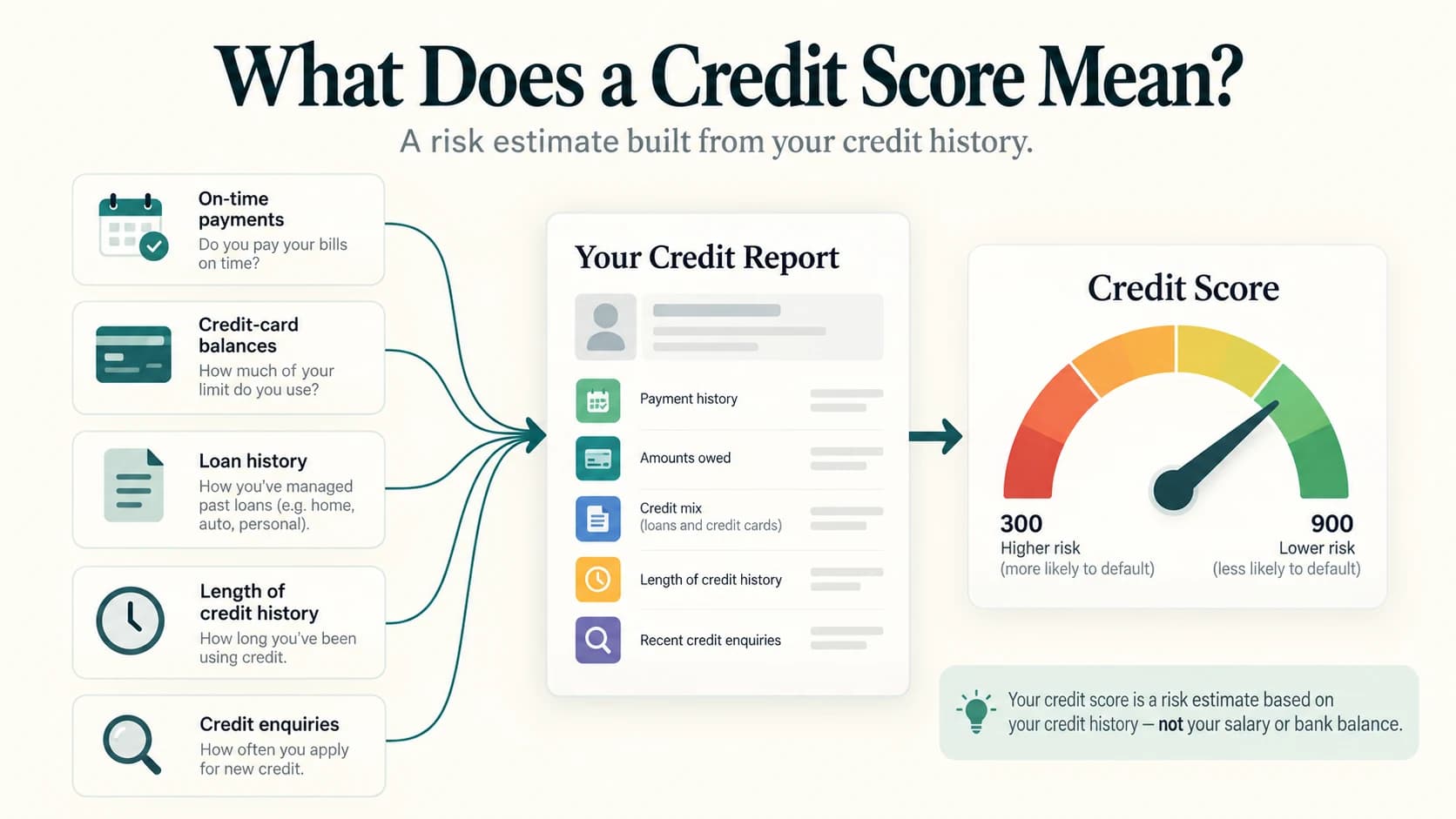
It is a statistical estimate of credit risk based on information in your credit history.
It is not a measure of wealth. It is not your bank balance. It is not a guarantee that a lender will approve you. And it is not a permanent grade that follows you unchanged for life.
A credit score compresses information about how you have used and repaid credit into a number that helps lenders make faster risk decisions.
Understanding what that number does—and what it does not do—makes credit scores far less mysterious.
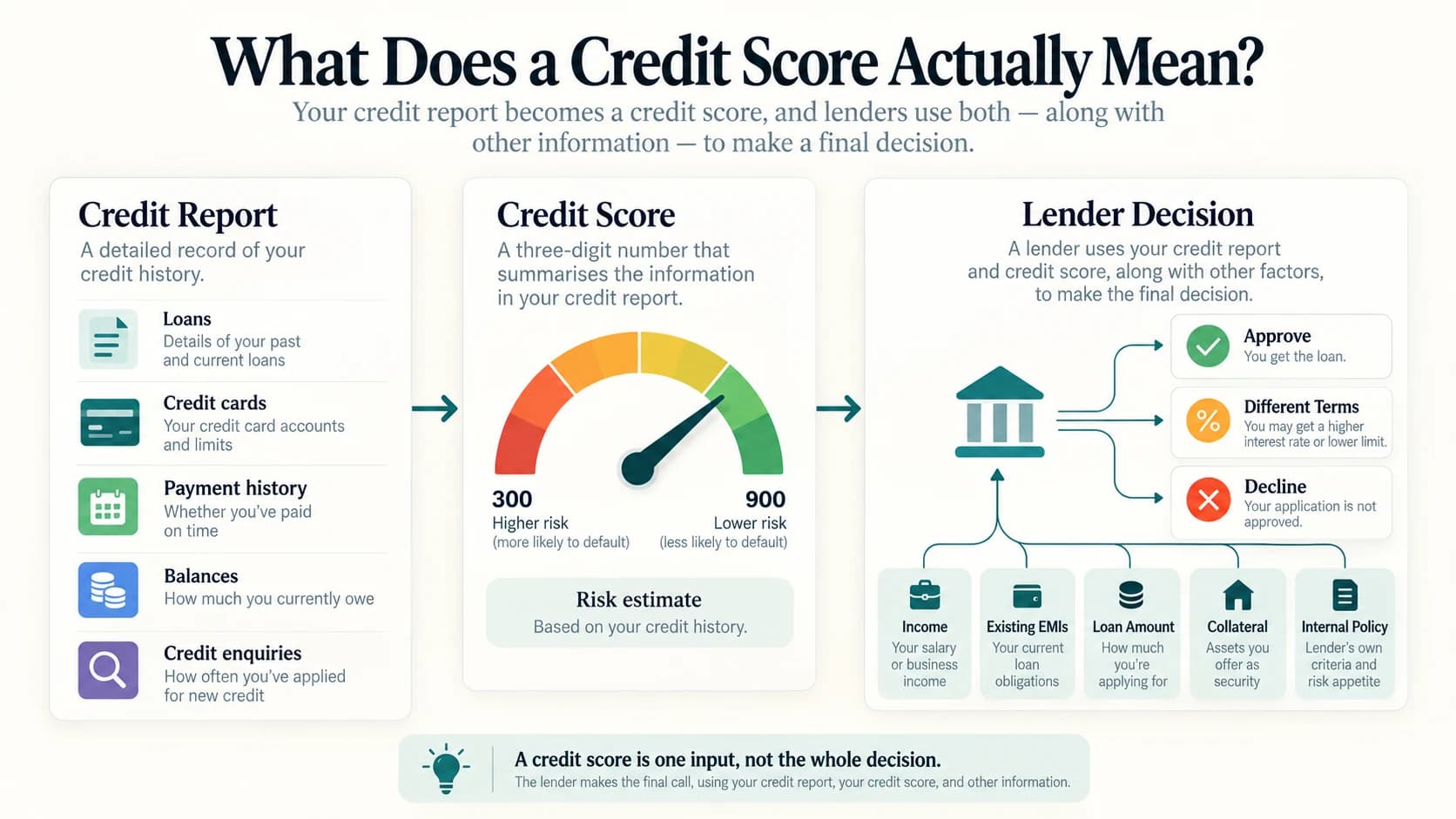
Credit score, credit report and loan decision are three different things
These terms are often used as if they mean the same thing.
They do not.
Your credit report is the underlying record
A credit report, or Credit Information Report (CIR), contains information reported by lenders about your credit accounts.
Depending on the bureau and report, it can include details such as:
- home, personal, vehicle and other loans;
- credit cards;
- account opening dates;
- loan amounts or credit limits;
- outstanding balances;
- repayment history;
- overdue amounts;
- days past due;
- account status; and
- enquiries made by lenders when you apply for credit.
Think of the report as the data file describing your borrowing history.
Your credit score is a summary of risk
The credit score is produced by a scoring model using information from that credit history.
In India, common consumer bureau scores are expressed on a scale from 300 to 900, with higher scores generally indicating lower predicted credit risk.
TransUnion CIBIL describes its CreditVision score as predicting the risk that a borrower will become 90 or more days past due on one or more credit accounts over the following 12 months.
That is an important way to understand the score.
A score does not say:
“This person is financially successful.”
It says something closer to:
“Based on the credit information available and this scoring model, borrowers with a profile like this show a certain level of repayment risk.”
The lender still makes the decision
The credit bureau does not approve your home loan, personal loan or credit card.
The lender does.
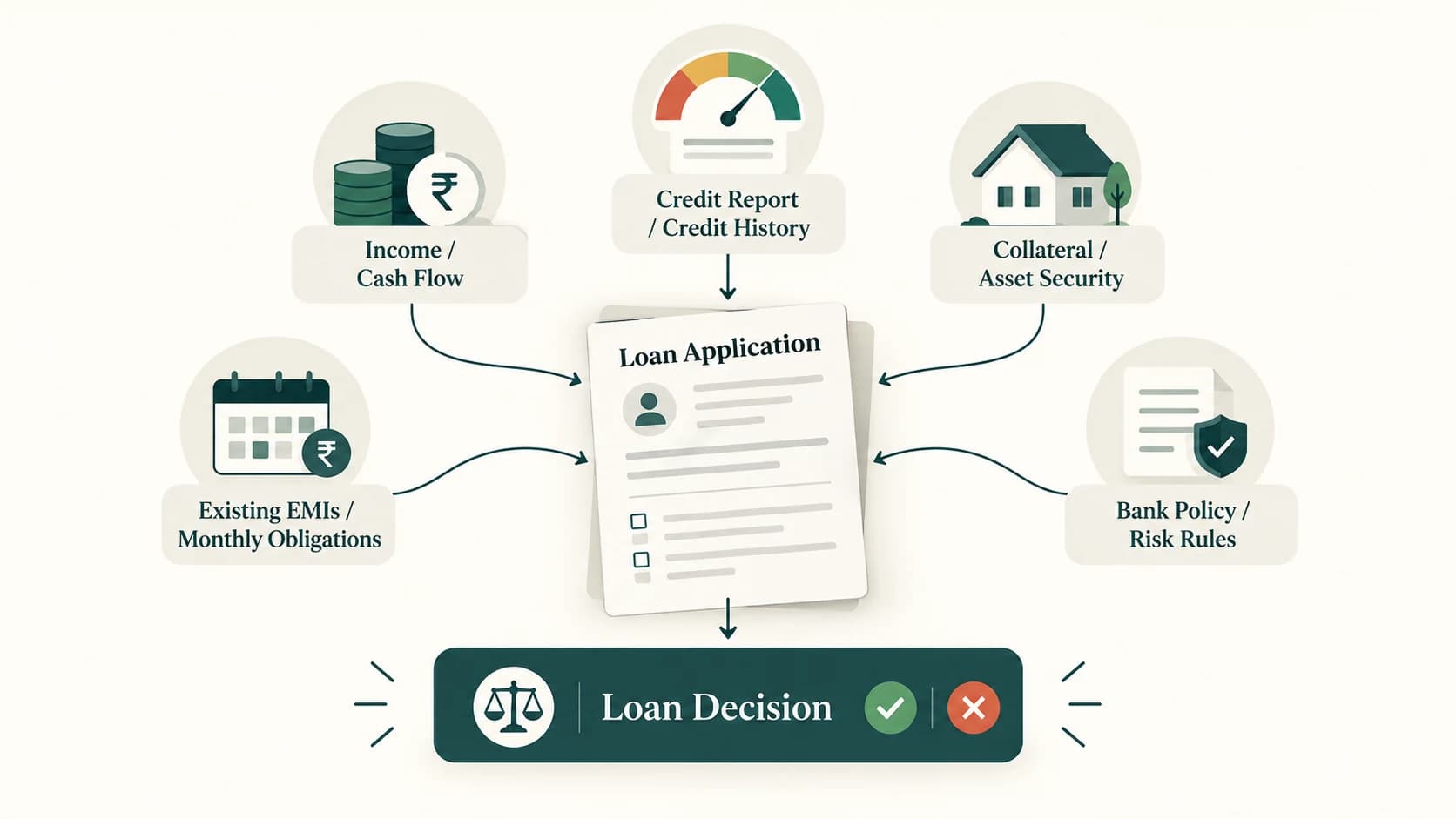
A bank or NBFC can combine your bureau score and report with other information such as:
- income;
- existing EMIs;
- employment or business profile;
- requested loan amount;
- collateral;
- age and eligibility rules;
- fraud and verification checks; and
- the lender's own internal credit policy.
That is why someone with a high credit score can still be rejected, while a borrower with a shorter credit history may still receive credit.
Score → one input.
Report → underlying credit history.
Lender → final decision.
What does a number such as 750 actually mean?
There is no universal RBI rule saying that a score of 750 guarantees approval or that 749 means rejection.
Different lenders set their own underwriting criteria.
Even the meaning of score bands belongs to the scoring model being used.
For example, TransUnion CIBIL's recent CreditVision reporting uses these risk bands:
| CIBIL CreditVision score | Bureau risk tier |
|---|---|
| 300–680 | Subprime |
| 681–730 | Near prime |
| 731–770 | Prime |
| 771–790 | Prime plus |
| 791–900 | Super prime |
These are TransUnion CIBIL risk tiers, not universal loan-approval rules.
A bank can use its own cut-offs, product rules and internal risk model. The acceptable profile for a secured home loan may also differ from that for an unsecured personal loan or premium credit card.
So rather than asking:
“What score guarantees a loan?”
A better interpretation is:
“Does my score indicate relatively lower or higher credit risk, and how does the rest of my application look?”
What information affects a credit score?
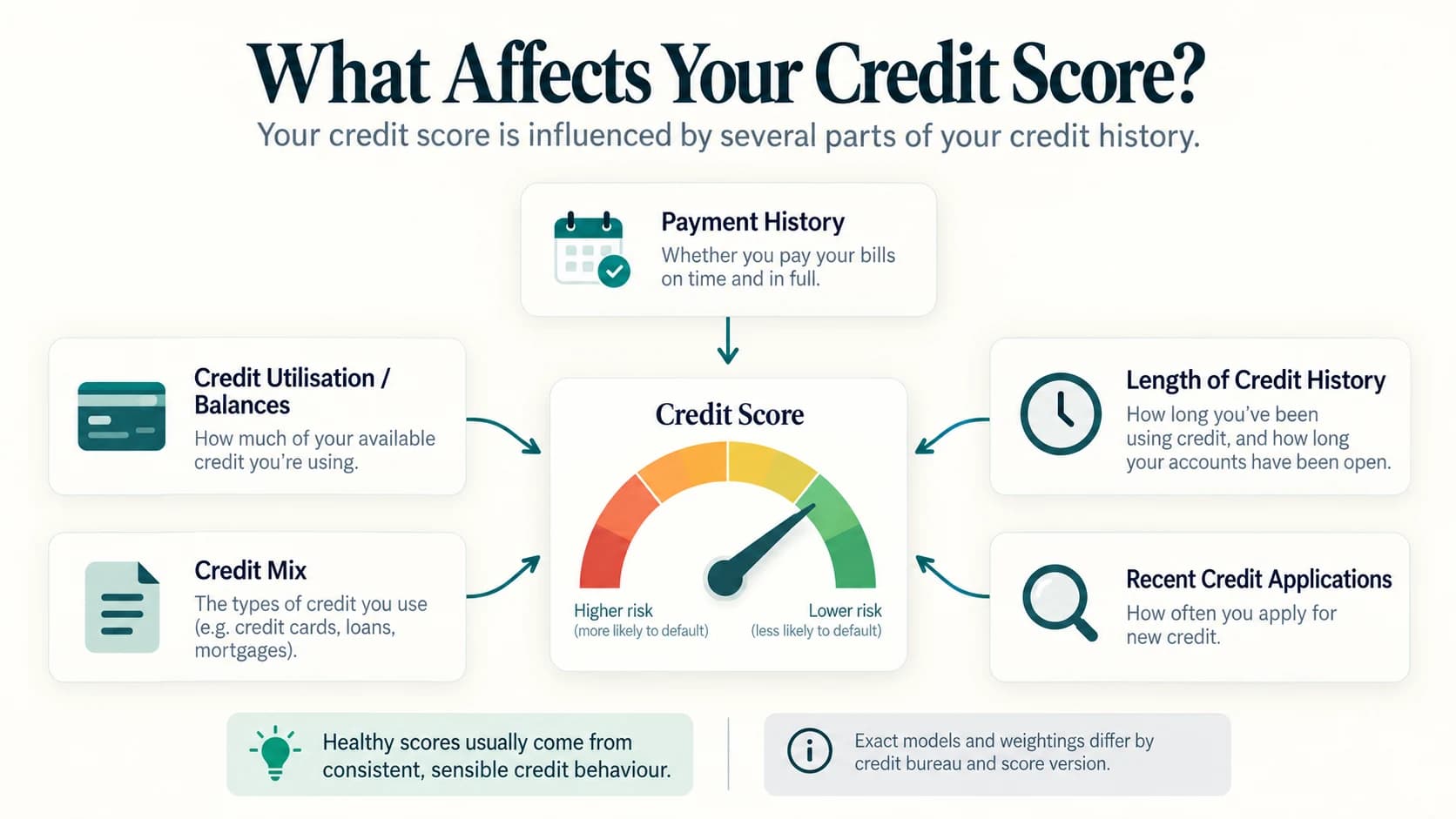
Credit bureaus do not all use exactly the same formula, and the precise weighting of each factor is proprietary.
But the broad signals are well understood.
Payment history
This is one of the most important.
If you consistently pay loan EMIs and credit-card dues on time, your report shows a pattern of meeting obligations.
Late payments, increasing days past due, defaults, settlements and write-offs can indicate greater risk.
A single late payment does not necessarily destroy a credit profile, but repeated or serious delinquency can be much more significant.
Credit utilisation and outstanding balances
For revolving credit such as credit cards, bureaus can consider how much of the available credit you are using.
Suppose your total card limit is ₹1 lakh.
If your reported balance is ₹10,000, your utilisation is 10%.
If it is ₹90,000, utilisation is 90%.
Consistently using a very large share of available revolving credit can indicate heavier dependence on borrowing, even if you have not yet missed a payment.
There is no single utilisation percentage that guarantees a particular score. The broader pattern matters.
Length of credit history
A longer, well-managed credit history gives a scoring model more information about how you behave over time.
Someone who has successfully handled credit for several years has a deeper record than someone who opened their first credit account last month.
That does not mean you should keep unnecessary expensive debt merely to create history. It means a longer record of responsible credit management can provide useful predictive information.
Type and mix of credit
Credit reports can contain different forms of borrowing—secured loans, unsecured loans and revolving credit such as cards.
Scoring models may consider the mix and management of these accounts.
The goal is not to collect as many different loan types as possible. Taking unnecessary loans just to “improve the mix” can create far more financial risk than benefit.
Recent applications and credit behaviour
When you apply for a loan or credit card, the lender may make a hard enquiry into your credit report.
Experian notes that hard enquiries may temporarily affect a credit score.
A cluster of new applications in a short period can also be relevant to lenders because it may suggest that the borrower is rapidly seeking additional credit.
By contrast, checking your own credit report is not the same as a lender enquiry. CRIF High Mark states that checking your personal credit score does not reduce it.
What does not automatically determine your credit score?
Several things people associate with financial health are different from credit history.
Your salary
A ₹2 lakh monthly salary does not automatically create a high credit score.
You can earn a large salary and repeatedly miss card payments.
Likewise, someone earning far less can maintain a strong repayment record.
Income matters greatly to the lender's affordability assessment, but that is not the same thing as the bureau credit score.
Your savings-account balance
Keeping ₹10 lakh in a savings account does not by itself prove how you handle borrowed money.
A credit score is primarily about credit behaviour.
Owning property
Owning a house can improve your overall financial position, but the property itself does not automatically create a high consumer credit score.
If you financed that property with a loan, the repayment history of the loan can become part of your credit profile.
Never borrowing money
This one surprises many people.
If you have never used formal credit, you may not have enough credit history for a conventional score.
That does not mean you are a bad borrower.
It means the bureau has limited evidence from which to predict your borrowing behaviour.
No credit score is different from a bad credit score
Imagine two people.
Person A has taken several loans and repeatedly missed payments.
Person B has never had a loan or credit card.
Both may face challenges when applying for new credit, but for completely different reasons.
Person A has negative credit history.
Person B may simply be new to credit.
Credit bureaus and lenders can use specialised methods for people with limited or no traditional credit history. TransUnion CIBIL, for example, offers new-to-credit scoring solutions, while Experian's current models can return special values when there is insufficient information to generate a conventional score.
A missing score should therefore not be interpreted as a score of zero or proof of poor repayment behaviour.
Why can your score differ between credit bureaus?
India has multiple credit information companies.
A lender may report information to the bureaus according to RBI requirements, but the score you see from one bureau does not have to be identical to another.
Why?
Because each bureau can use:
- its own scoring algorithm;
- different model versions;
- somewhat different data at a particular moment;
- different variables or weightings; and
- different timing for processing updates.
Experian explicitly notes that its score can differ from scores produced by other bureaus because each uses its own algorithms and modelling approach.
Even the same bureau can update its scoring model over time. Experian's newer V4 model, for example, can produce a different score from its earlier model even where the underlying credit information is broadly similar.
So a credit score should always be read together with which bureau and which model produced it.
Why does your score change even when you did nothing “wrong”?
A score is a snapshot, not a permanent label.
It can move because new information has arrived.
For example:
- your credit-card balance increased;
- a loan balance declined;
- a new account was opened;
- an old account aged further;
- a lender made a new enquiry;
- a delayed payment was reported;
- an incorrect entry was corrected; or
- the bureau's scoring model changed.
RBI requires credit institutions and credit information companies to update credit information regularly. The reporting framework moved to at least fortnightly reporting from January 1, 2025, with shorter intervals possible.
Some bureaus and lenders can therefore process changes multiple times within a month.
This also means you should not panic over a small day-to-day movement without checking the underlying report.
The report usually tells you more than the score alone.
Does checking your own score reduce it?
No—checking your own credit report or score is different from applying for new credit.
A lender enquiry made during an actual application can be recorded as a credit enquiry and may affect scoring.
Your own consumer check is for monitoring.
This distinction is useful because people sometimes avoid checking their report out of fear that they will damage the score they are trying to inspect.
Regular monitoring can actually help you notice errors, unfamiliar accounts or suspicious enquiries.
What if your credit report contains a mistake?
Credit reports depend on information supplied by credit institutions, so errors or outdated information can occur.
Examples include:
- a loan you do not recognise;
- a closed account still appearing incorrectly;
- an incorrect overdue amount;
- repayment not updated;
- duplicate accounts; or
- an enquiry you did not authorise.
Do not try to “repair” a genuine negative record by falsely disputing correct information.
But if the data is genuinely wrong, use the bureau's dispute process and contact the relevant lender where necessary.
RBI's framework gives credit institutions and credit information companies an overall 30-calendar-day period to resolve eligible correction complaints. Where qualifying updation or rectification is delayed beyond that period, a compensation framework of ₹100 per calendar day can apply, subject to the rules and exclusions.
RBI also requires credit bureaus to alert consumers by SMS or email when their credit information report is accessed where contact details are available, providing another way to notice unexpected enquiries.
You can access a free credit report
RBI requires credit information companies to provide individuals whose credit history is available with them access to one free full credit report, including the credit score, once in each calendar year, on request and after authentication.
That makes it possible to review the actual report rather than relying entirely on a score shown inside a third-party finance app.
The report is worth checking before a major loan application.
Look for:
- accounts that belong to you;
- correct outstanding balances;
- payment history;
- overdue entries;
- closed accounts;
- recent enquiries; and
- signs of identity misuse.
A 780 score is useful information.
A 780 score plus an accurate understanding of why it is 780 is much more useful.
How do you build a healthier credit profile?
There is no legitimate shortcut that turns a weak credit profile into an excellent one overnight.
The basics are less exciting but more reliable.
Pay on time.
Avoid late EMIs and card payments.
Do not routinely max out revolving credit.
Keep balances manageable relative to available limits.
Apply for new credit deliberately.
Do not send unnecessary applications to many lenders merely to see who approves you.
Check your report for errors.
Correct data matters because the score is built from the underlying information.
Borrow only when the debt makes financial sense.
A loan taken purely to manufacture a credit score can cost far more than any scoring benefit.
Most importantly, focus on the behaviour behind the number.
A healthy credit score should be the result of sensible credit management, not the goal that drives unnecessary borrowing.
The simplest way to read a credit score
A credit score is best understood as a risk signal.
A higher score generally suggests a lower level of predicted credit risk under that bureau's scoring model.
A lower score suggests that something in the available credit profile is associated with greater risk.
No score guarantees approval.
No single score tells a lender whether you can afford a particular EMI.
And no score tells the complete story of your financial life.
When you apply for a loan, the bank still needs to answer a much broader question:
Given this person's credit history, income, current obligations and the loan being requested, are we comfortable lending this money?
The credit score helps answer part of that question.
It was never meant to answer all of it.