
KYC, AML, Cybersecurity & Customer Protection
An exam-focused, concept-first study module on customer due diligence, KYC and CKYCR, money-laundering prevention, cyber fraud, digital banking security, consumer liability, fair practices, and RBI's Integrated Ombudsman Scheme.
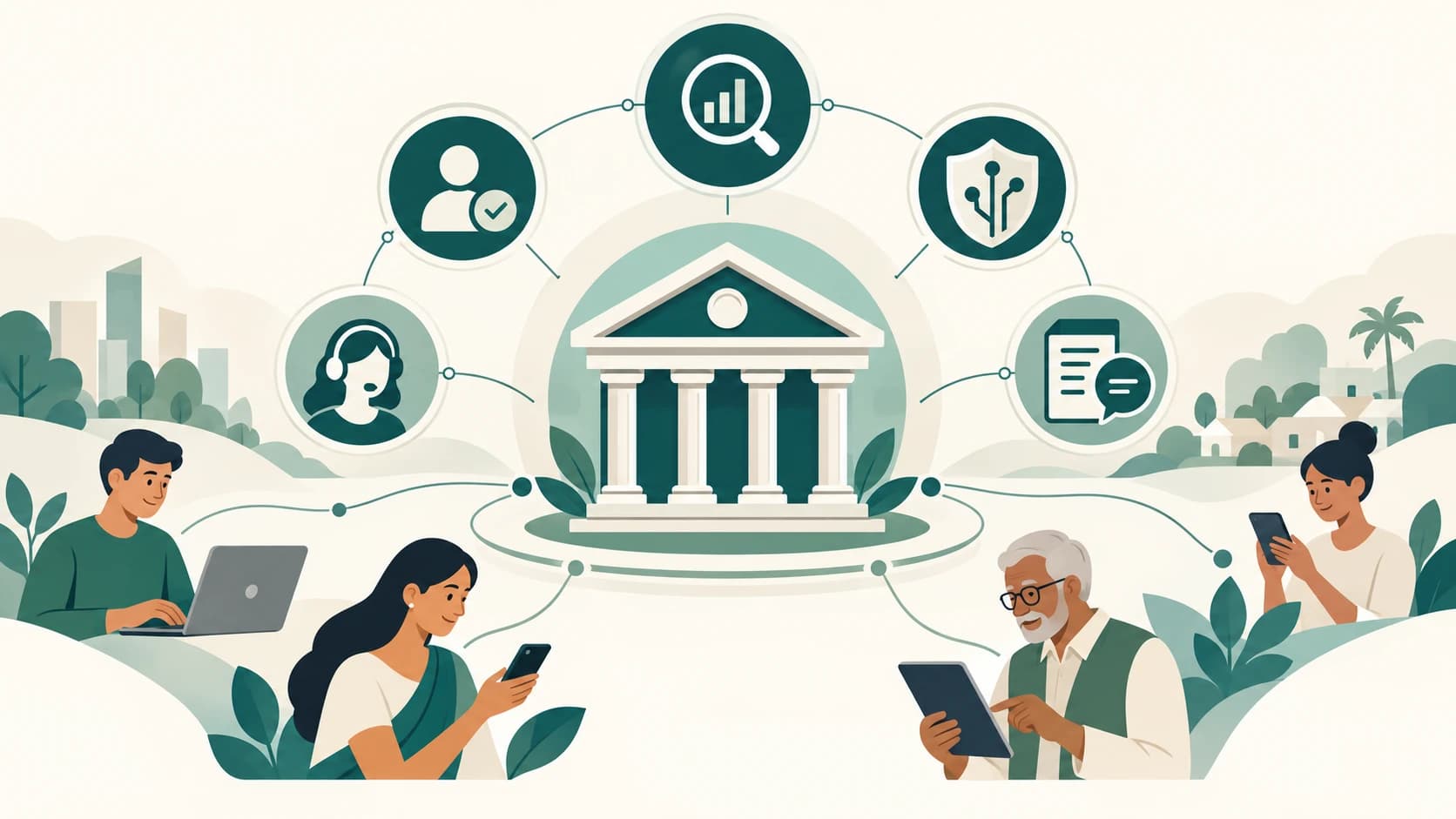
Importance: VERY HIGH — IBPS PO/CSA, SBI PO/Clerk, IBPS RRB, banking SO/IT, and other relevant examinations.
Study prerequisites: Customer accounts (BA-05), lending basics (BA-06), and digital payments (BA-11).
Learning purpose. A trustworthy banking system must know its customers, detect illicit financial activity, protect systems and accounts, treat customers fairly, and resolve complaints. These five responsibilities are connected, but each has its own regulatory framework and practical workflow.
Learning outcomes
After studying this module, you should be able to:
- distinguish KYC, CIP, CDD, EDD, ongoing due diligence and periodic re-KYC;
- explain customer risk classification and why KYC is a continuous obligation;
- identify the roles of OVDs, PAN/Form 60, Aadhaar, CKYCR, beneficial owners and V-CIP;
- explain what money laundering is and why an ordinary large transaction is not automatically suspicious;
- distinguish AML, CFT, PMLA, FIU-IND, FATF, STR and CTR;
- describe placement, layering and integration without mistaking them for mandatory legal elements of every case;
- understand transaction monitoring, record keeping, sanctions screening and confidentiality;
- distinguish cybercrime, customer deception, unauthorised transaction, institutional fraud classification and operational risk;
- recognise phishing, vishing, smishing, fake QR, remote-access, SIM-swap and mule-account risks;
- explain authentication, encryption, tokenisation and layered bank security in simple terms;
- state what a customer should do immediately after suspected digital fraud;
- explain RBI's five customer-rights principles and fair-disclosure requirements;
- apply the logic of zero/limited customer liability to unauthorised electronic banking transactions;
- distinguish a genuine unauthorised transaction from an authorised transfer induced by a scam;
- understand grievance escalation through the bank, Internal Ombudsman and RBI Ombudsman;
- correctly identify RB-IOS, 2026 as the scheme currently governing newly received eligible complaints;
- distinguish the new 2026 complaint window, compensation caps and appeal structure from the former 2021 framework;
- avoid memorising temporary rule versions as permanent banking concepts.
Chapters
KYC and Customer Due Diligence
KYC and Customer Due Diligence. A detailed chapter in KYC, AML, Cybersecurity & Customer Protection, with explanations and examples for Indian banking examinations.
AML, CFT, PMLA and FIU-IND Basics
AML, CFT, PMLA and FIU-IND Basics. A detailed chapter in KYC, AML, Cybersecurity & Customer Protection, with explanations and examples for Indian banking examinations.
Banking Fraud and Cybersecurity Basics
Banking Fraud and Cybersecurity Basics. A detailed chapter in KYC, AML, Cybersecurity & Customer Protection, with explanations and examples for Indian banking examinations.
Customer Rights, Fair Practices and Unauthorized Transactions
Customer Rights, Fair Practices and Unauthorized Transactions. A detailed chapter in KYC, AML, Cybersecurity & Customer Protection, with explanations and examples for Indian banking examinations.
RBI Integrated Ombudsman and Grievance Redressal
RBI Integrated Ombudsman and Grievance Redressal. A detailed chapter in KYC, AML, Cybersecurity & Customer Protection, with explanations and examples for Indian banking examinations.