
Data Representation and Logic Basics
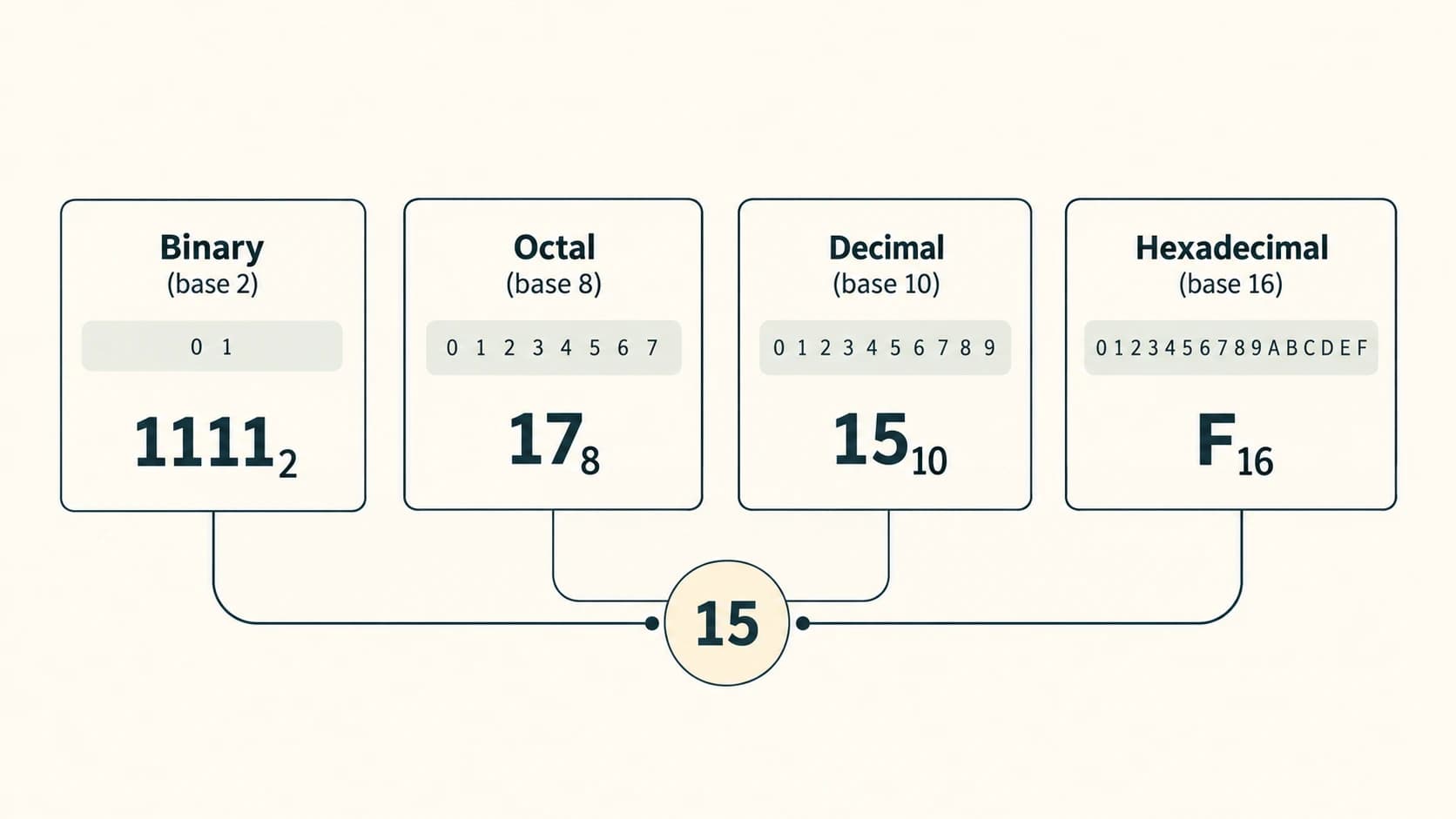
Computer Awareness module explaining binary, decimal, octal and hexadecimal numbers, elementary base conversions, ASCII and Unicode, logic gates, common data types and file formats, with 60 explained MCQs.
Track: Computer Awareness for Banking and Recruitment Examinations
Level: Beginner
Coverage: Five curriculum lessons (CA-04-01 to CA-04-05)
Practice: 60 original objective questions with explained answers
A computer works with patterns of bits. Those patterns may represent numbers, letters, pictures or instructions. By learning a few number systems and logical rules, you can understand why computers use binary, how text is stored, why digital circuits make decisions, and what common files contain. These are useful ideas for banking and other recruitment-exam computer awareness, even if you never write a program.
Study approach: Learn the meaning of each concept first. For conversions, practice with small numbers rather than memorizing a large formula sheet. Attempt each lesson's 12 MCQs before consulting the explanations. All questions are original exam-style practice—not claimed previous-year questions.
Module learning outcomes
After completing the module, you should be able to:
- Recognize base-2, base-8, base-10 and base-16 notation and valid digits.
- Convert small whole numbers between common bases with place values or grouping.
- Distinguish ASCII, Unicode, a character/code point and an encoding such as UTF-8.
- Explain Boolean values and identify the outputs of common elementary logic gates.
- Recognize everyday data types, file formats, file extensions and practical limitations of extension-based identification.
Chapters
Binary, Decimal, Octal and Hexadecimal Basics
Binary, Decimal, Octal and Hexadecimal Basics. Foundational Computer Awareness explanations, examples and explained practice questions for banking and recruitment exam preparation.
Number-System Conversions at Awareness Level
Number-System Conversions at Awareness Level. Foundational Computer Awareness explanations, examples and explained practice questions for banking and recruitment exam preparation.
ASCII, Unicode and Character Encoding
ASCII, Unicode and Character Encoding. Foundational Computer Awareness explanations, examples and explained practice questions for banking and recruitment exam preparation.
Boolean Logic and Basic Logic Gates
Boolean Logic and Basic Logic Gates. Foundational Computer Awareness explanations, examples and explained practice questions for banking and recruitment exam preparation.
Common Data Types and File Formats
Common Data Types and File Formats. Foundational Computer Awareness explanations, examples and explained practice questions for banking and recruitment exam preparation.